14 October 2026 - 4 December 2026
Marcel Broodthaers and Agnieszka Kurant
Marcel Broodthaers • Agnieszka Kurant
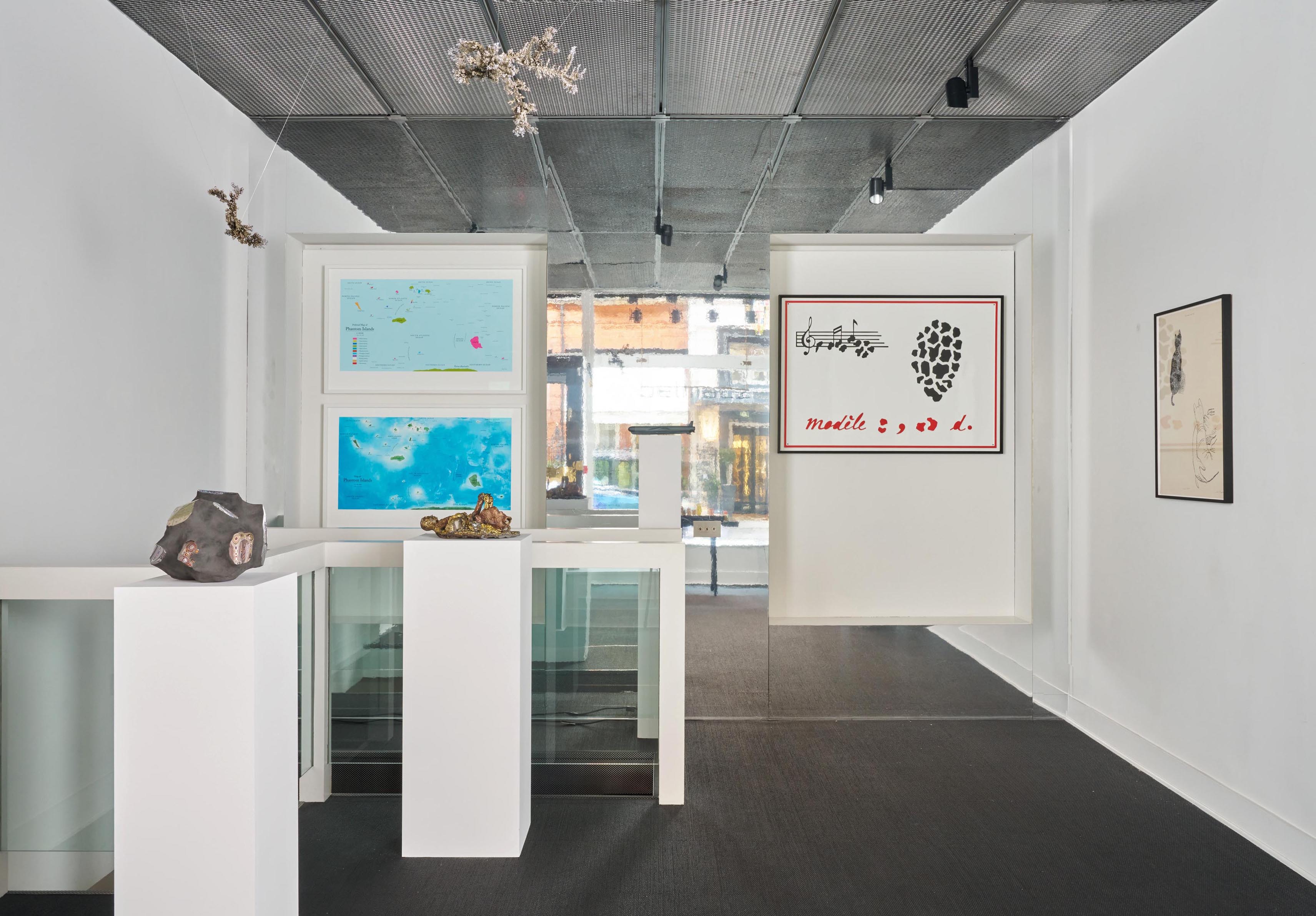
Installation View
Belmacz is delighted to present historical works of Marcel Broodthaers in dialogue with the speculative experimentation of Agnieszka Kurant.
Kurant’s recent sculptures exist alongside archival works conceptualised by Broodthaers for his 1975 exhibition Décor: A Conquest by Marcel Broodthaers at London’s ICA.
Marcel Broodthaers
Marcel Broodthaers’ body of work constitutes institutional critique as art ad infinitum. Born in Brussels on 28th January 1924, Broodthaers began life as a poet. In 1957 Broodthaers produced his first film, La Clef de l’Horloge, a “visual poem” honouring Kurt Schwitters. Of course, my regard for Schwitters is immense and learning how formative his oeuvre was to Broodthaers intrigued me. Equally, with such shared sensitivities, learning that he befriended the brilliant Piero Manzoni in 1962, seemed natural. And during a show at the Palais de Beaux-Arts, Manzoni signed a certificate of authenticity declaring Marcel Broodthaers a “living sculpture”.
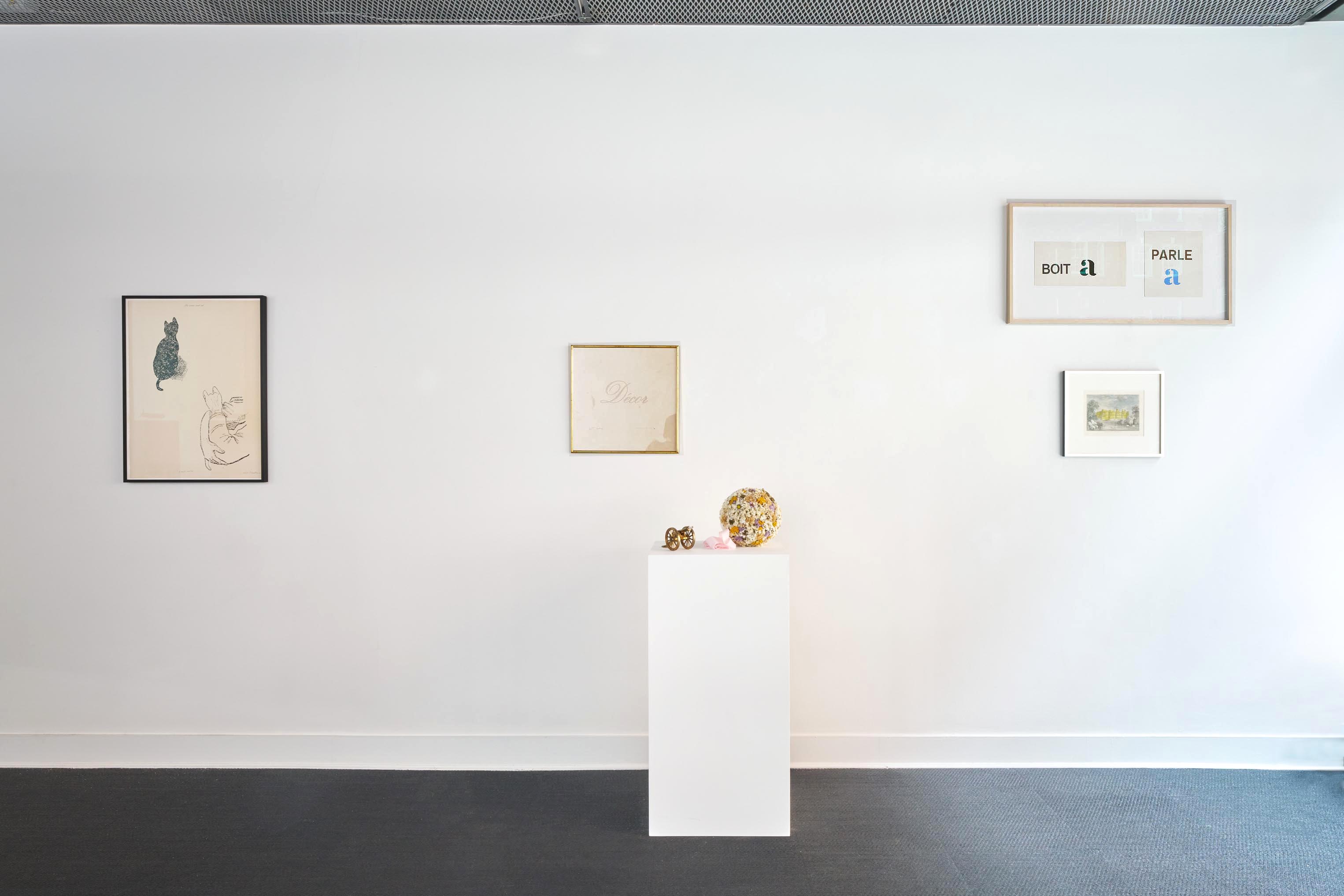
Installation View
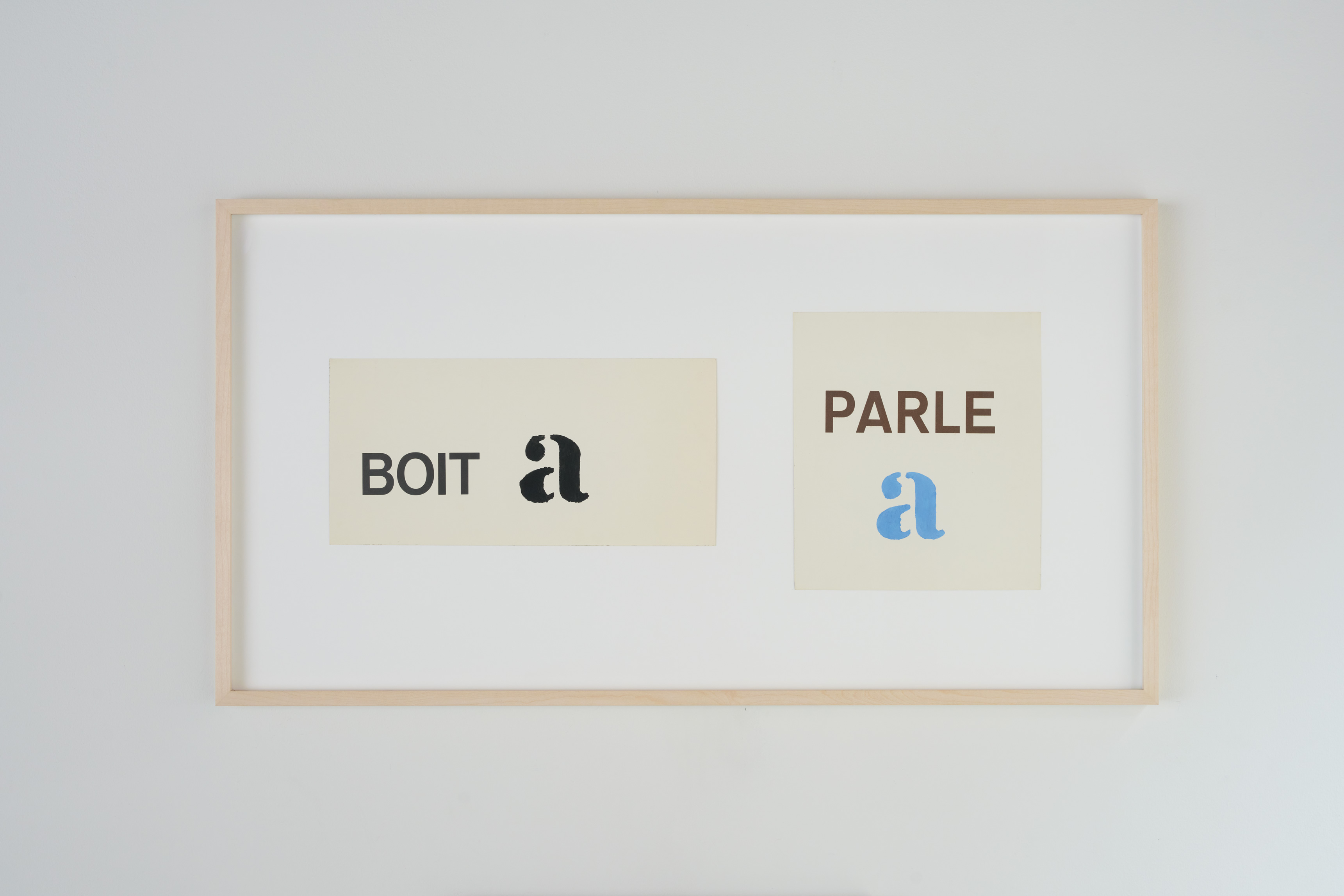
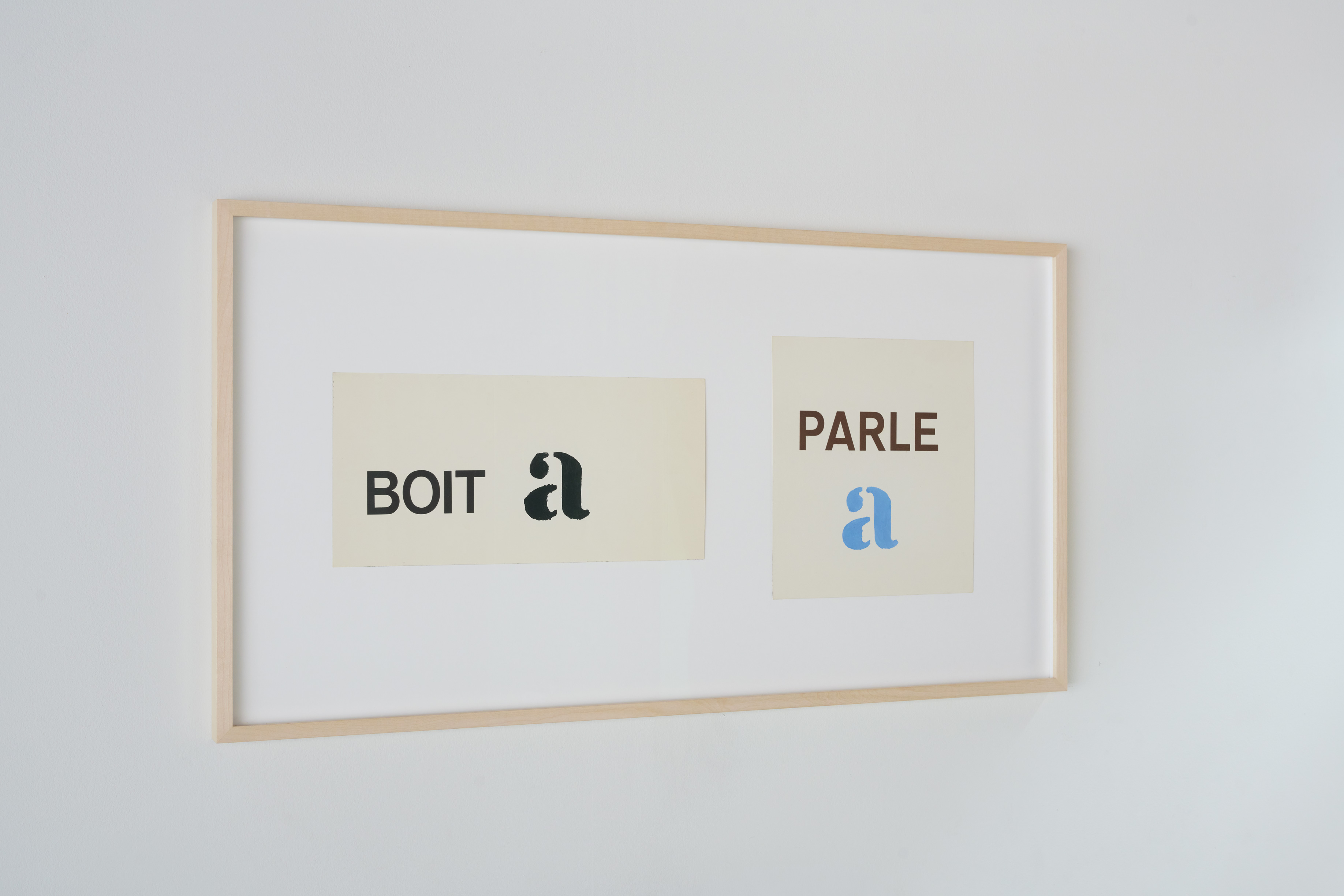
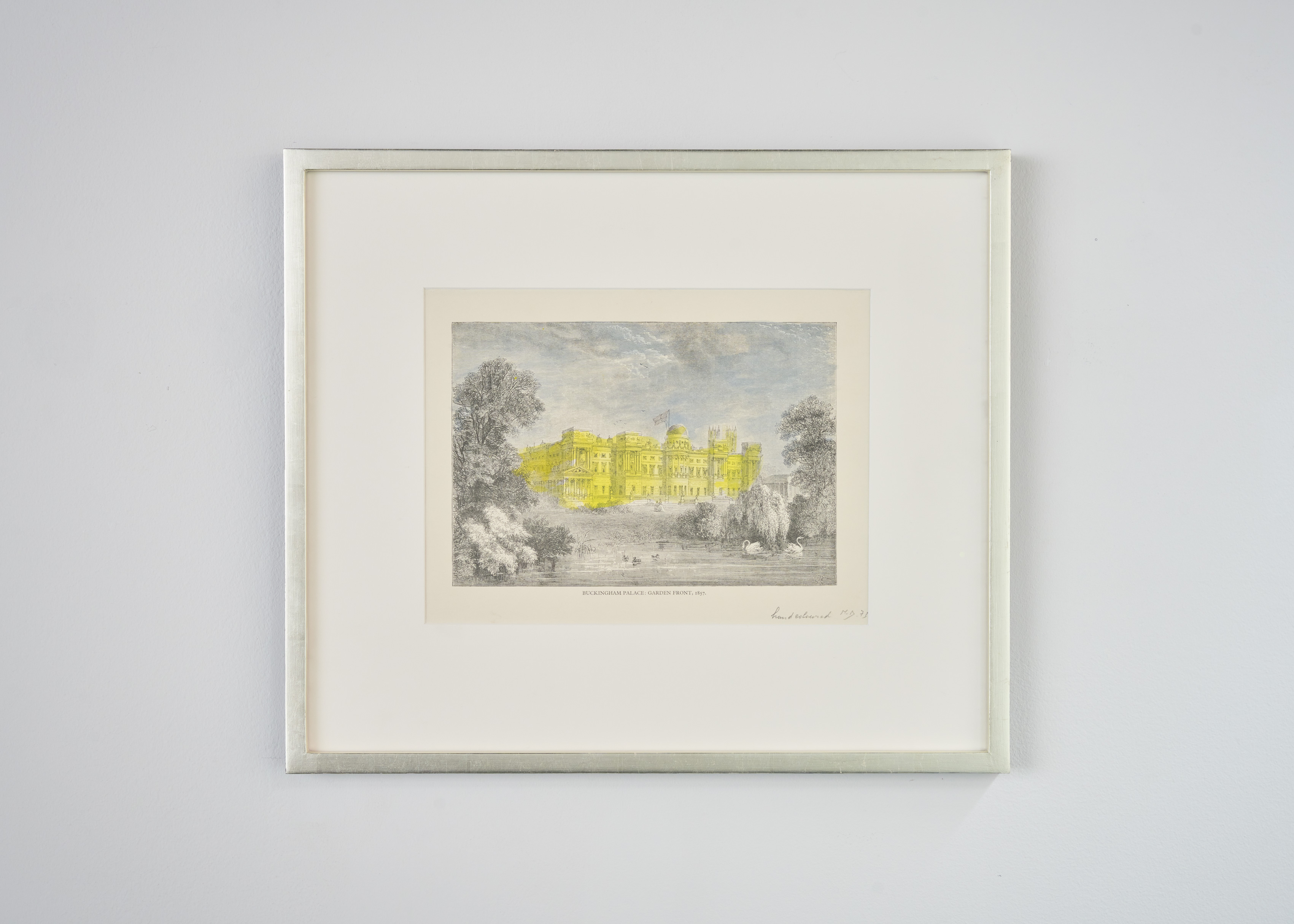
Marcel Broodthaers, Buckingham Palace: Garden front, 1857, 1973
engraving heightened with watercolour and ink, 20 x 26 cm
“I, too, wondered if I could not sell something and succeed in life,” proclaimed Broodthaers. “The idea of inventing something insincere finally crossed my mind, and I set to work
at once”. Pense-Bête (1964) marks the transition of his poetry from purely textual to visual, poignantly encasing the last copies of his final poetry book in plaster — entombing the past, transforming words into a new, statement object.
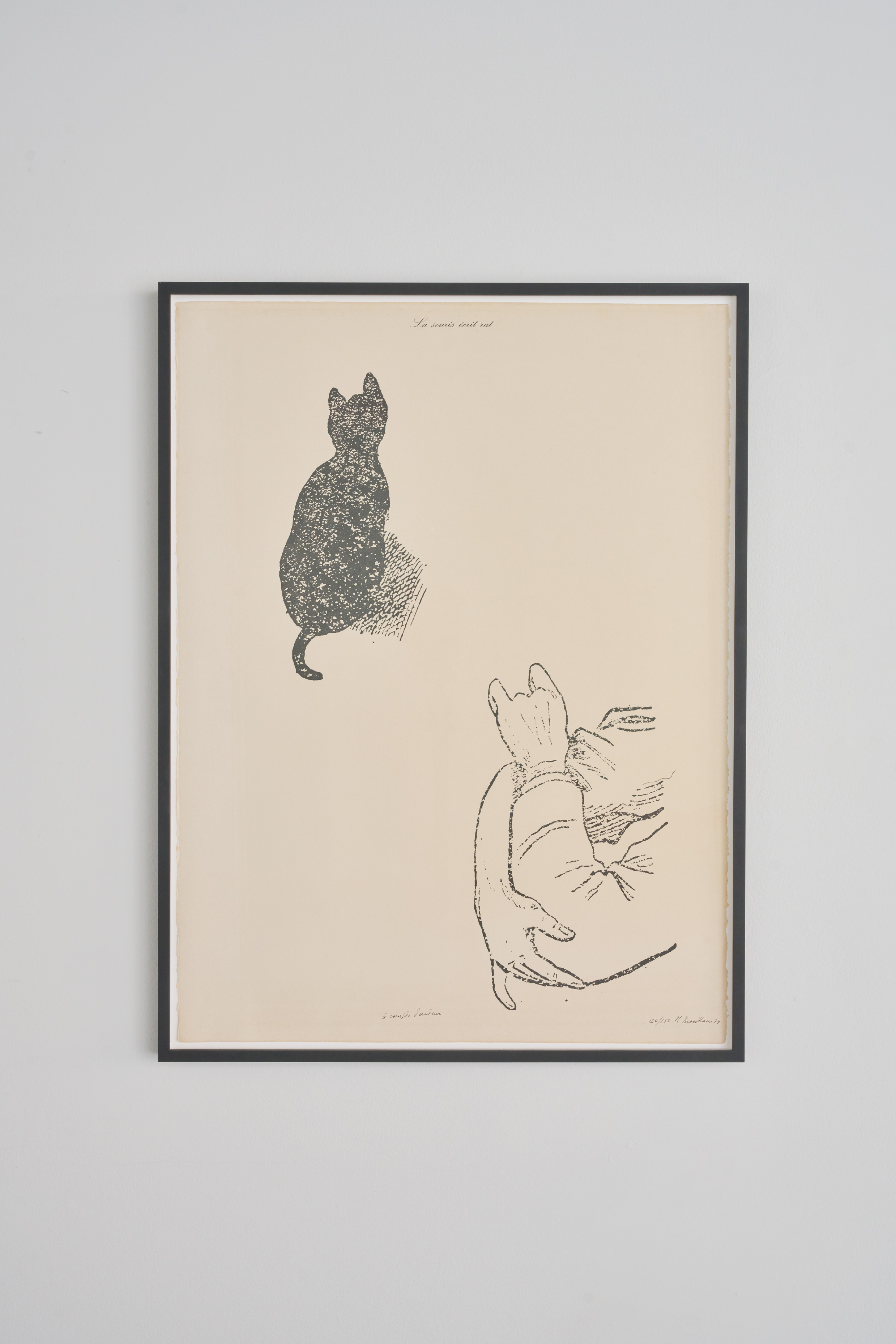
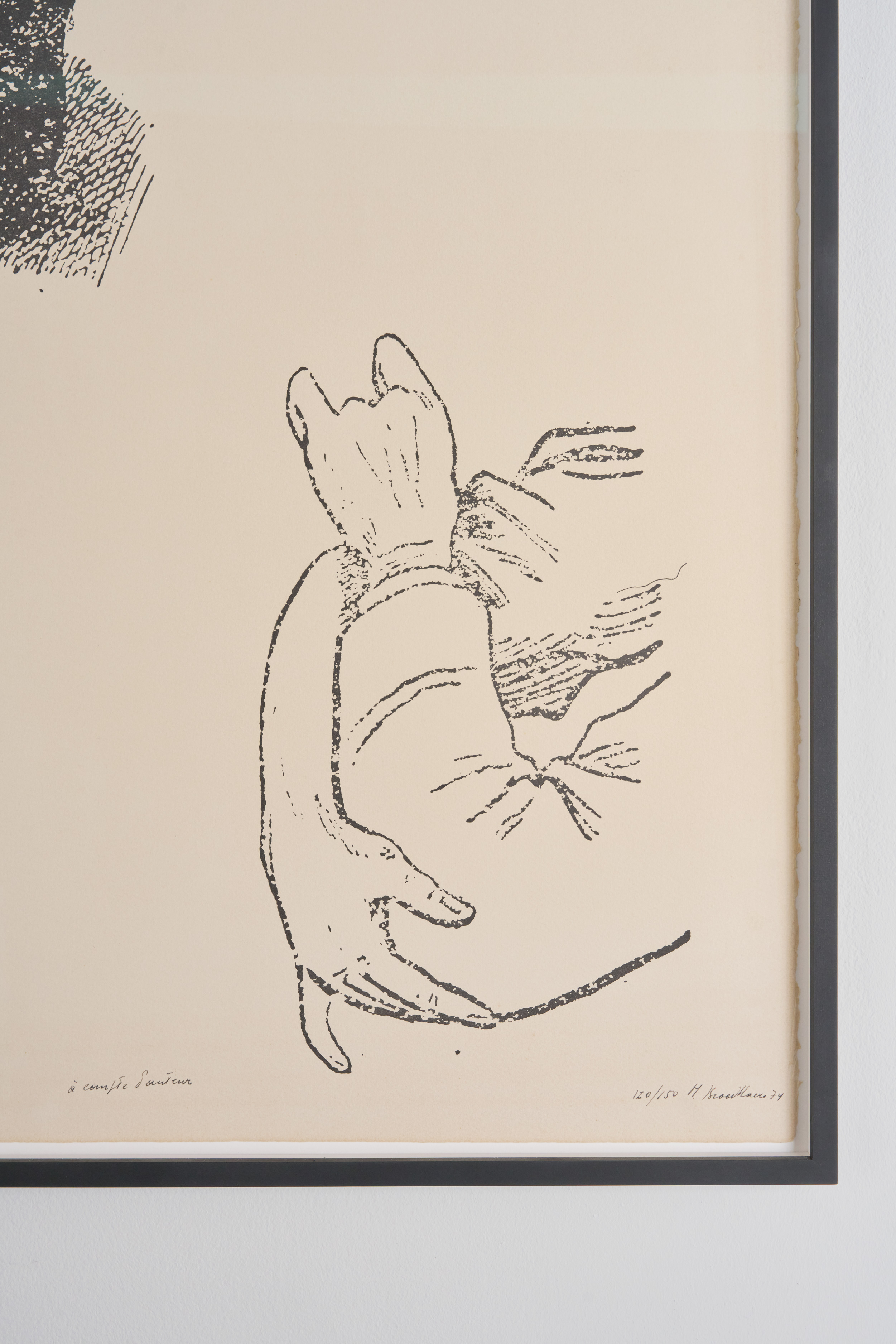
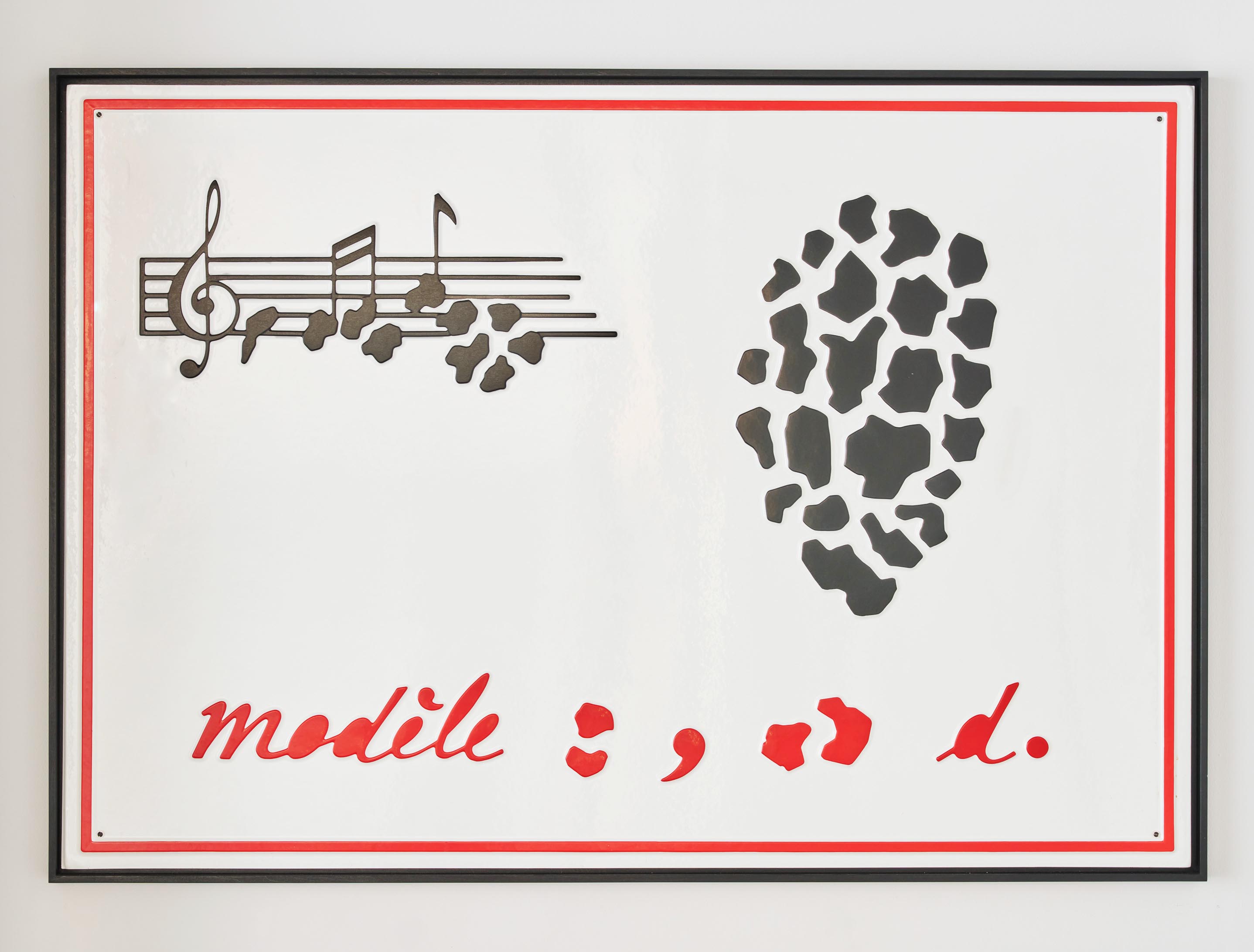
Marcel Broodthaers, Modèle (Charbon), 1969
vacuum formed plastic plate, 82 x 120 cm ed: 7/7
Hereafter rose a twelve-year career with 50 films and 70 solo shows. Initially working with plaster, pots, mussel shells and egg shells, in 1968 his interrogation of the art-economic complex culminated in one of the twentieth century’s most influential endeavours: the travelling Musée d’Art Moderne, Département des Aigles (Museum of Modern Art, Department of Eagles). Debuting in his Brussels home on 27th September 1968, rooms became galleries with mounted postcard reproductions of nineteenth century paintings (with artists such as Courbet and Ingres) adorning walls. The resulting transient, mock museum grew to twelve sections over its four-year run, and paved the way for artists to manipulate the power structures of the museum like a tangible material.
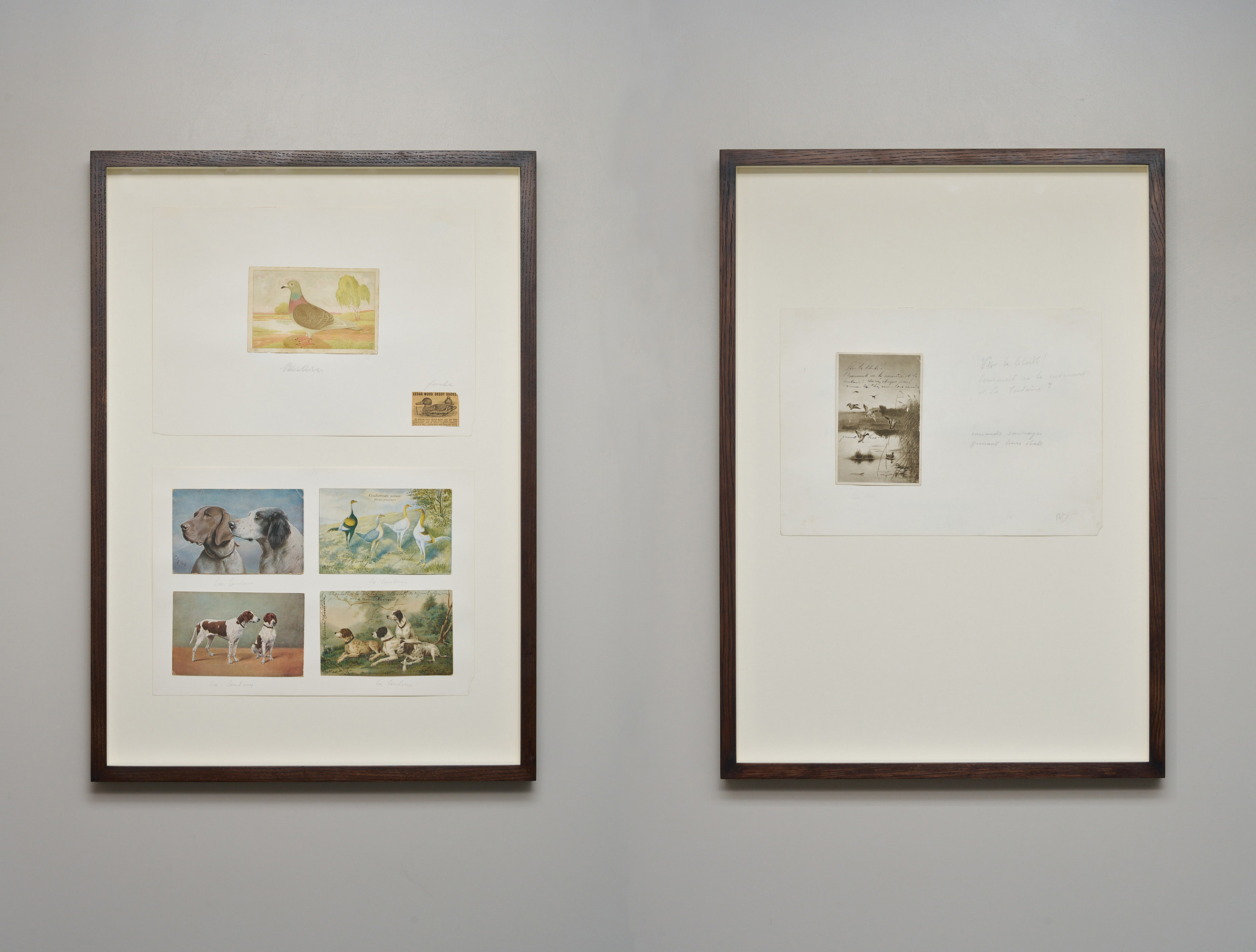
Marcel Broodthaers, La Chasse; La Chasse - vive la liberté, circa 1972
graphite and postcard on paper, diptych, each: 24.2 x 34 cm
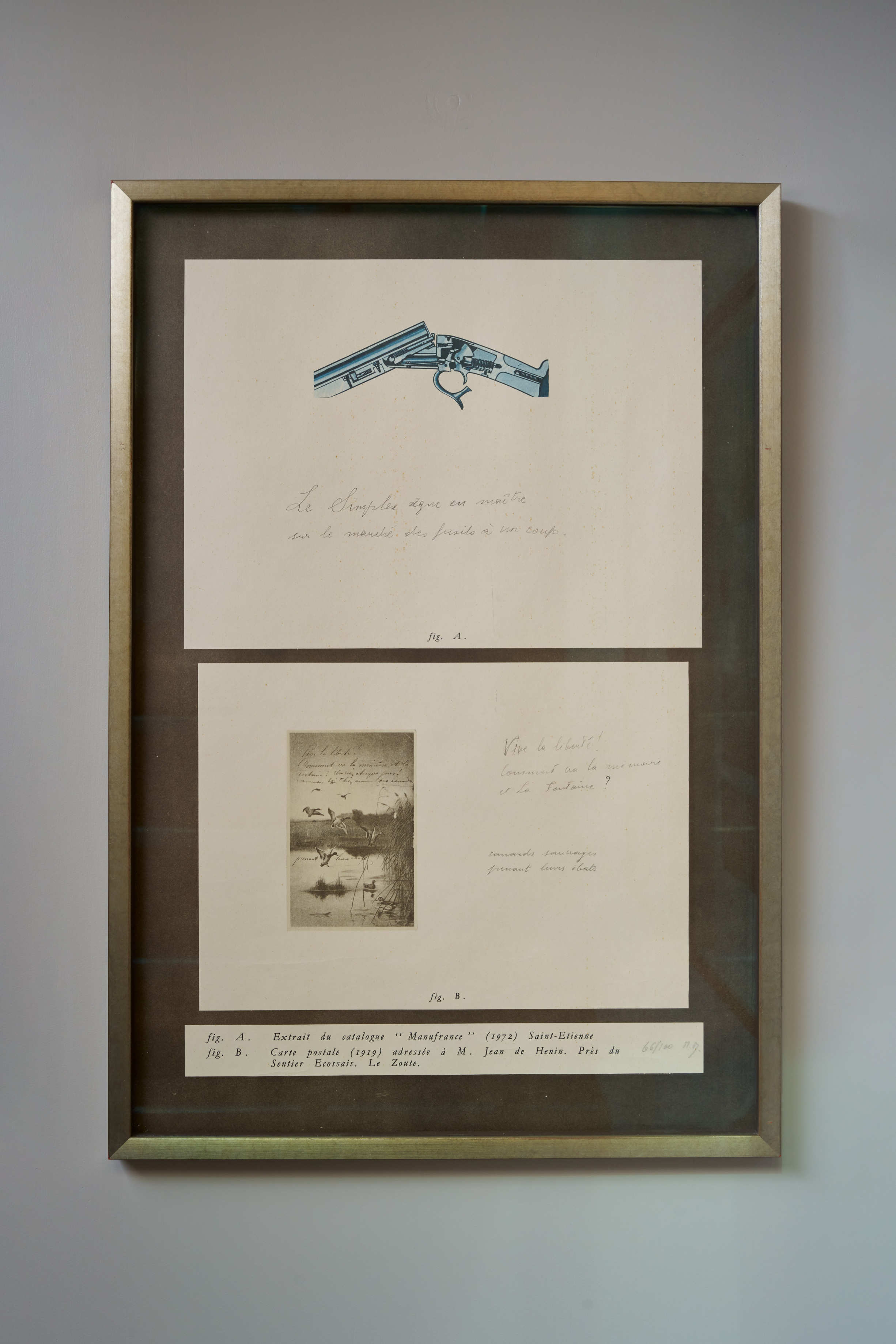
Marcel Broodthaers, Comment va la mémoire et La Fontaine, 1973
offset lithograph on paper, in 3 parts, 64.8 x 43.9 cm
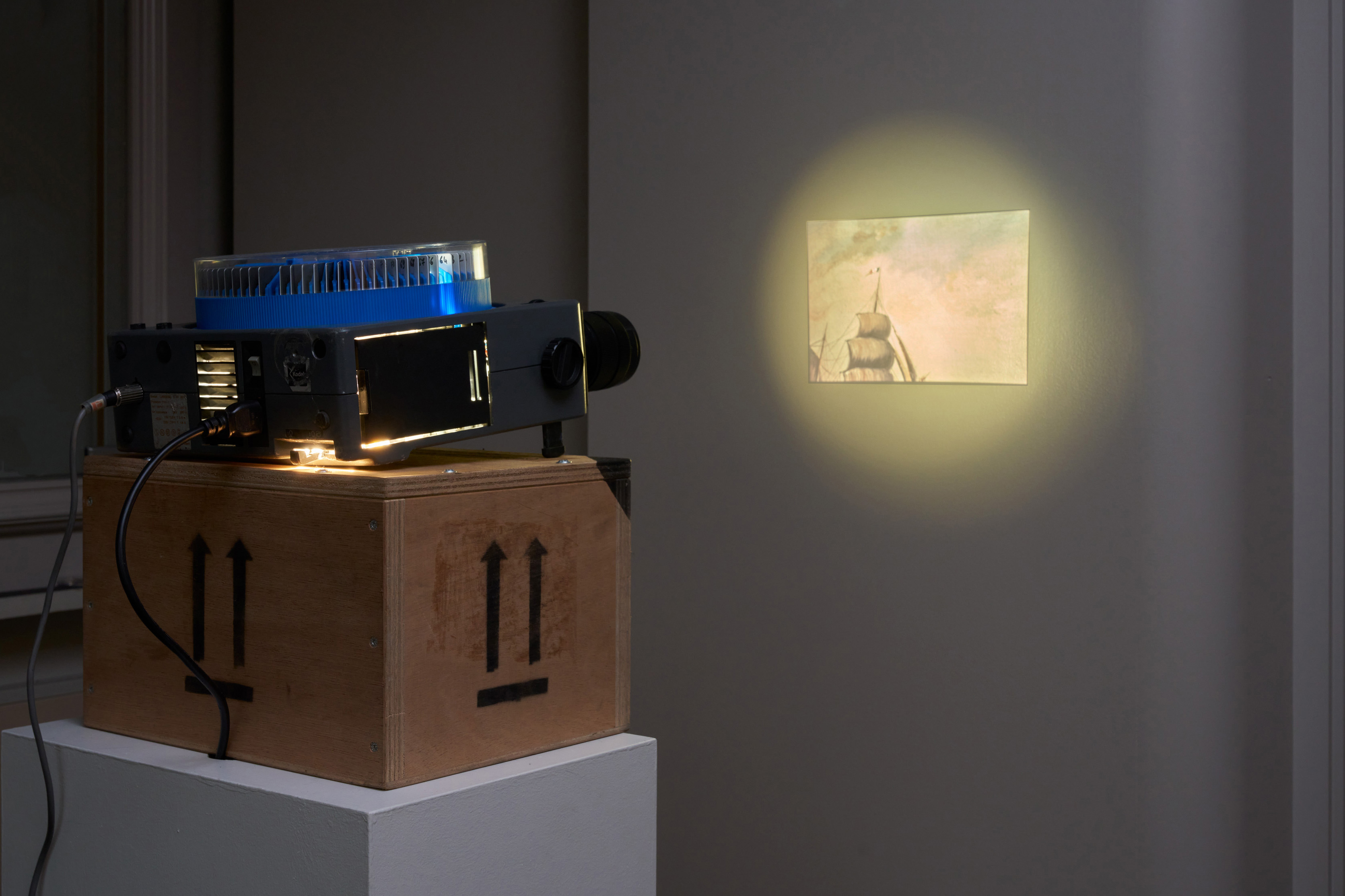
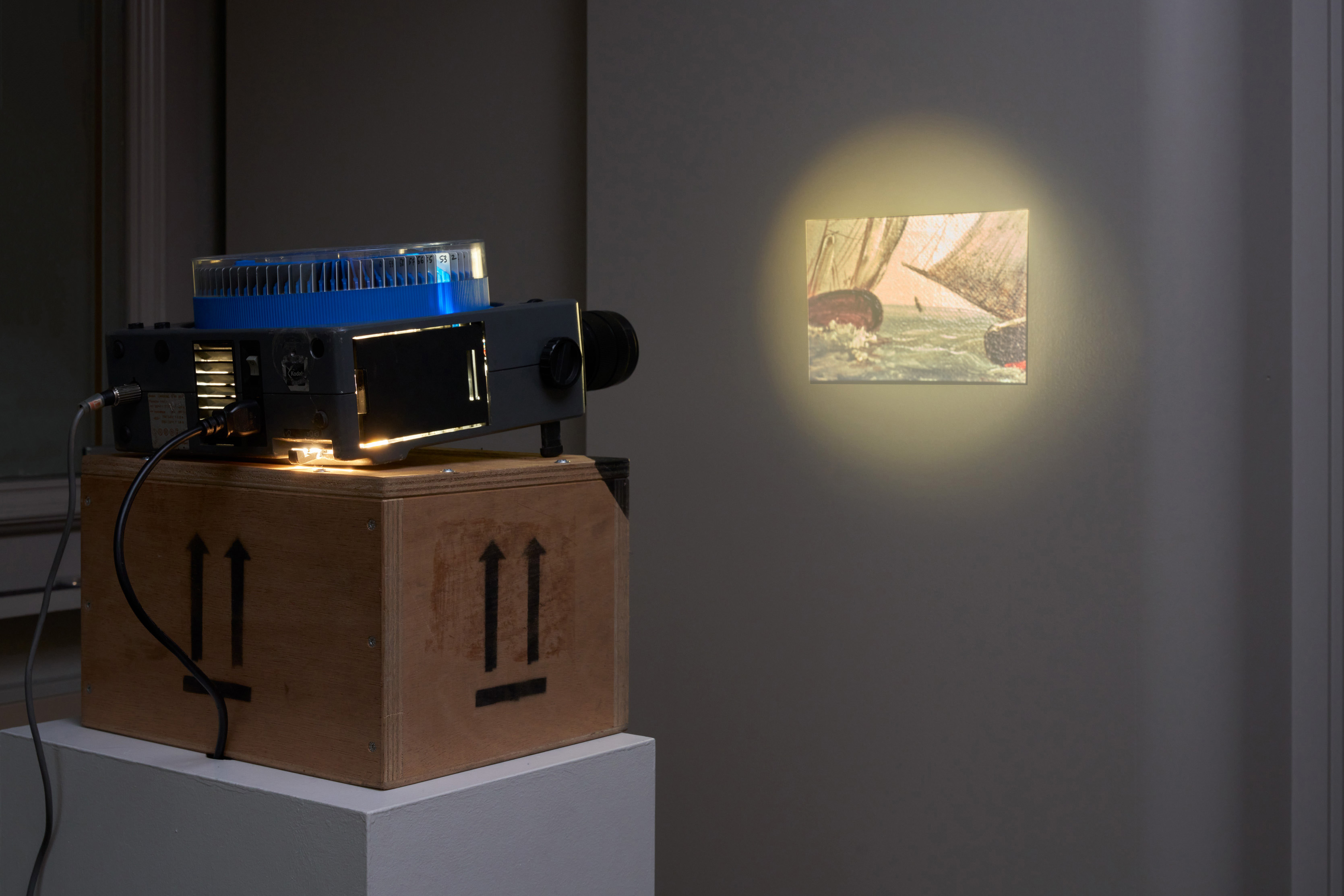
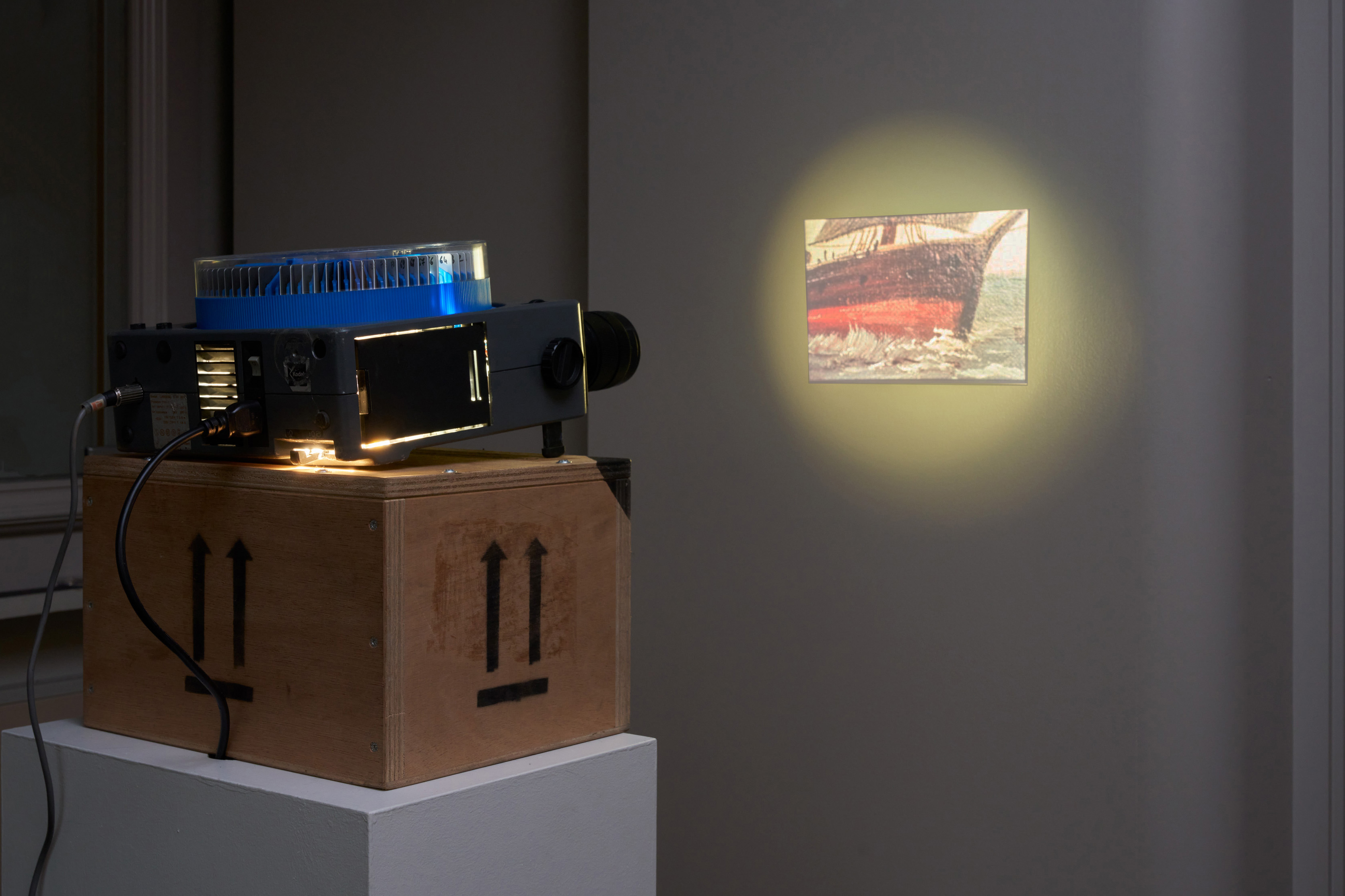
Marcel Broodthaers, Bateau Tableau, 1973
projection of 80 slides of a painting, overall dimensions variable
Marcel Broodthaers, Bateau Tableau, 1973
projection of 80 slides, overall dimensions variable
Marcel Broodthaers, Bateau Tableau, 1973
projection of 80 slides of a painting, overall dimensions variable
Simply put, the work of Broodthaers is a puzzle. The deep involvement with European history and thought, financial systems, power structures, exhibition making — as well as artistic reproduction — was visionary, and resonates still. And thus, Agnieszka Kurant felt the valid companion to sit alongside as a twenty-first century responding voice. I was fascinated to find out that Agnieszka had immense interest in Broodthaers, with several works a direct response to his. For this exhibition, Agnieszka and I selected pieces orientated to ideas around war and warfare. Indeed, the centre of this pairing is taken up by an element of Décor, the final UK show of Broodthaers, taking place at ICA in 1975. The exhibition thus becomes an occasion to open up a dialogue between the two, and continue the conversations of Marcel Broodthaers with great resonance.
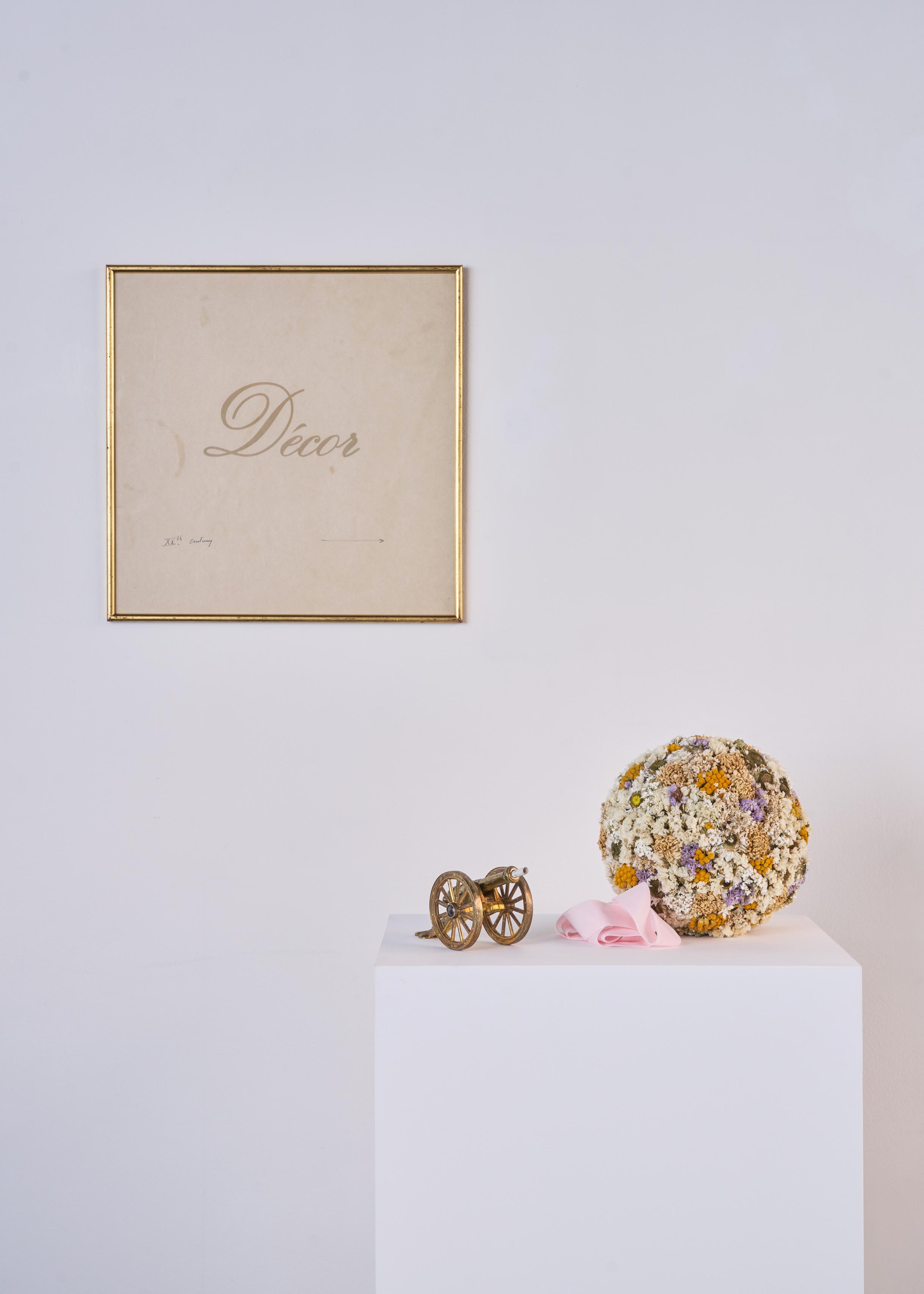
Marcel Broodthaers, Décor (triptych), 1975
dried flowers, velvet ribbon, print and ink on paper, cast brass cannon and paper scroll, flowers: 24 cm Ø, paper: 45 x 45 cm, cannon: 9.3 x 8.5 x 18.5 cm, paper scroll: 5 x 3 cm
Agnieszka Kurant
Agnieszka Kurant is a conceptual artist investigating collective and nonhuman intelligences, the future of labor and creativity, and the exploitations within digital capitalism. She is the recipient of the 2020 LACMA A+T Award and the 2019 Frontier Art Prize.
Her solo exhibitions include Marian Goodman Gallery, New York (2025 and 2026), MUDAM, Luxembourg (2024); Castello di Rivoli, Turin (2021-23); Sculpture Center, New York (2013); and Kunstverein Hannover (2023). In 2015 she realized a commission for the façade of the Guggenheim Museum, and in 2022 a permanent commission for the MIT List Visual Arts Center, Cambridge. Her work was also exhibited at the Gwangju Biennale (2024), Sydney Biennial (2024); Istanbul Biennial (2019); Museum of Modern Art, New York (2021), Centre Pompidou (2024), Palais de Tokyo (2014), Jeu de Paume (2025), Pinault Collection — Bourse de Commerce, Paris (2024); MCA, Sydney (2025), Gropius Bau (2023); Louisiana Museum, Denmark (2023); SFMOMA (2020); Kunsthalle Wien (2020), Whitechapel Art Gallery, London (2020), Witte de With, Rotterdam (2011), Moderna Museet (2014); the Kitchen (2016), Gamec, Bergamo (2023), ZKM Karlsruhe (2022), Guggenheim Bilbao (2017), Performa Biennial, New York (2009 and 2013), and Frieze Projects, London (2008). Her monograph Collective Intelligence, co-edited by Stefanie Hessler and Jenny Jaskey, was published in 2026 by Sternberg Press.
Kurant’s solo survey exhibition will open at Museum Tinguely in Basel in June 2027.
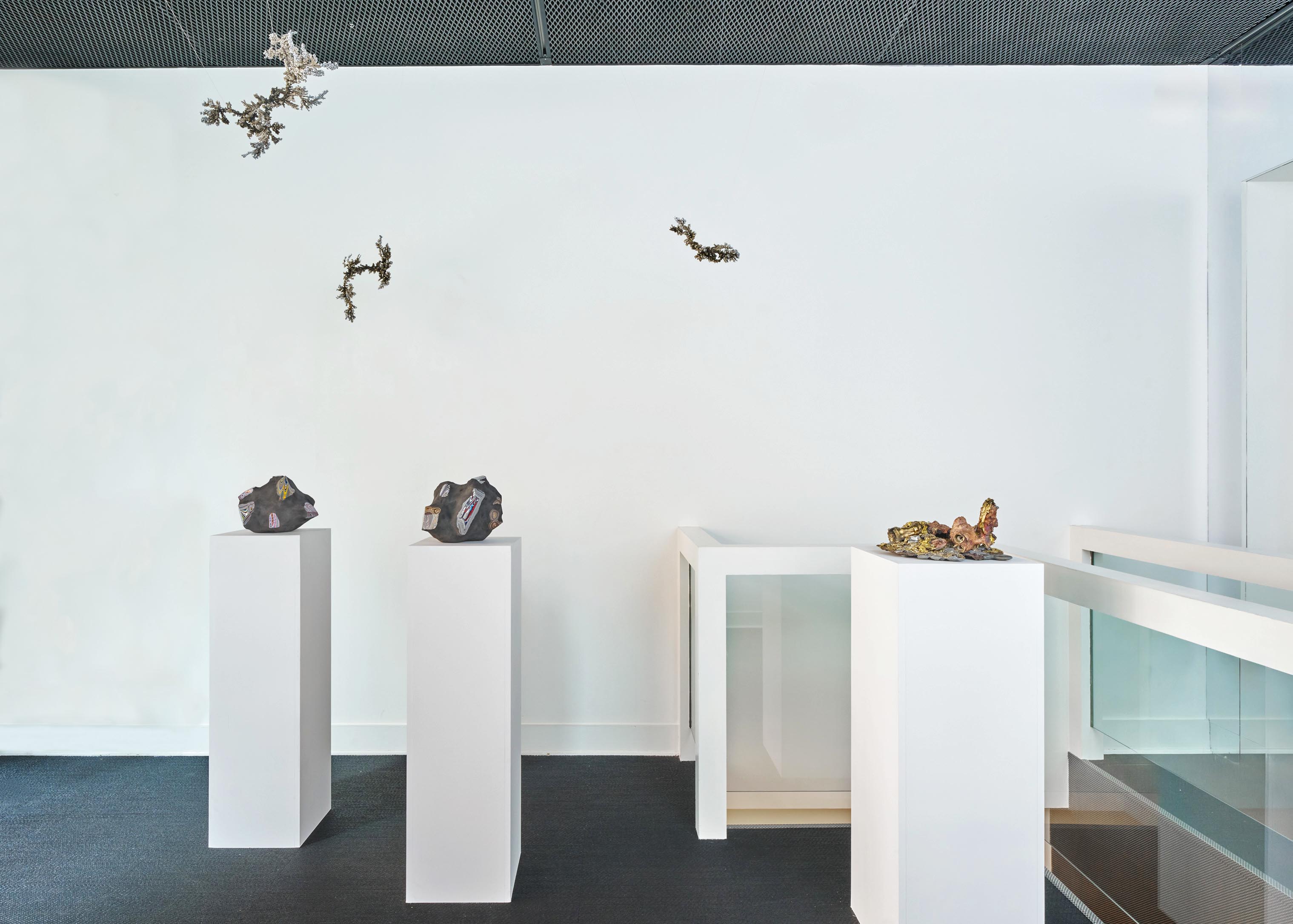
Installation View
Maps of Phantom Islands (2011) chart the fictions on which imperial conquests were built. The work features phantom islands that appeared on real maps from the 15th century to the 1940s, born of mirages, navigational errors or the inventions of colonial explorers. Though they never existed, these territories functioned as virtual capital: they financed expeditions, prompted territorial claims, shaped political decisions and led to real economic transactions and wars.
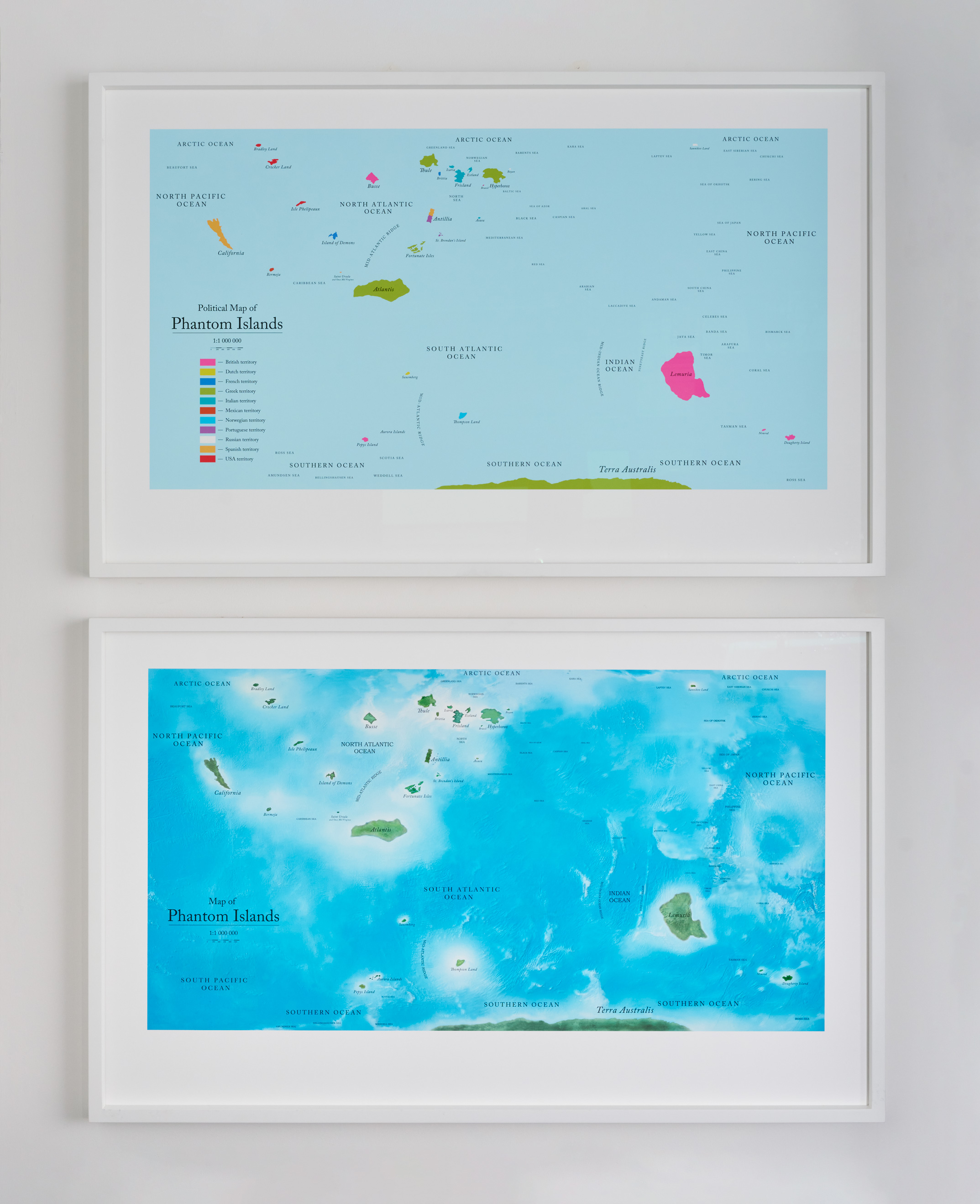
Agnieszka Kurant, Maps of Phantom Islands, 2011
pigment prints on archival paper, 90.2 x 81.3 x 81.3 cm
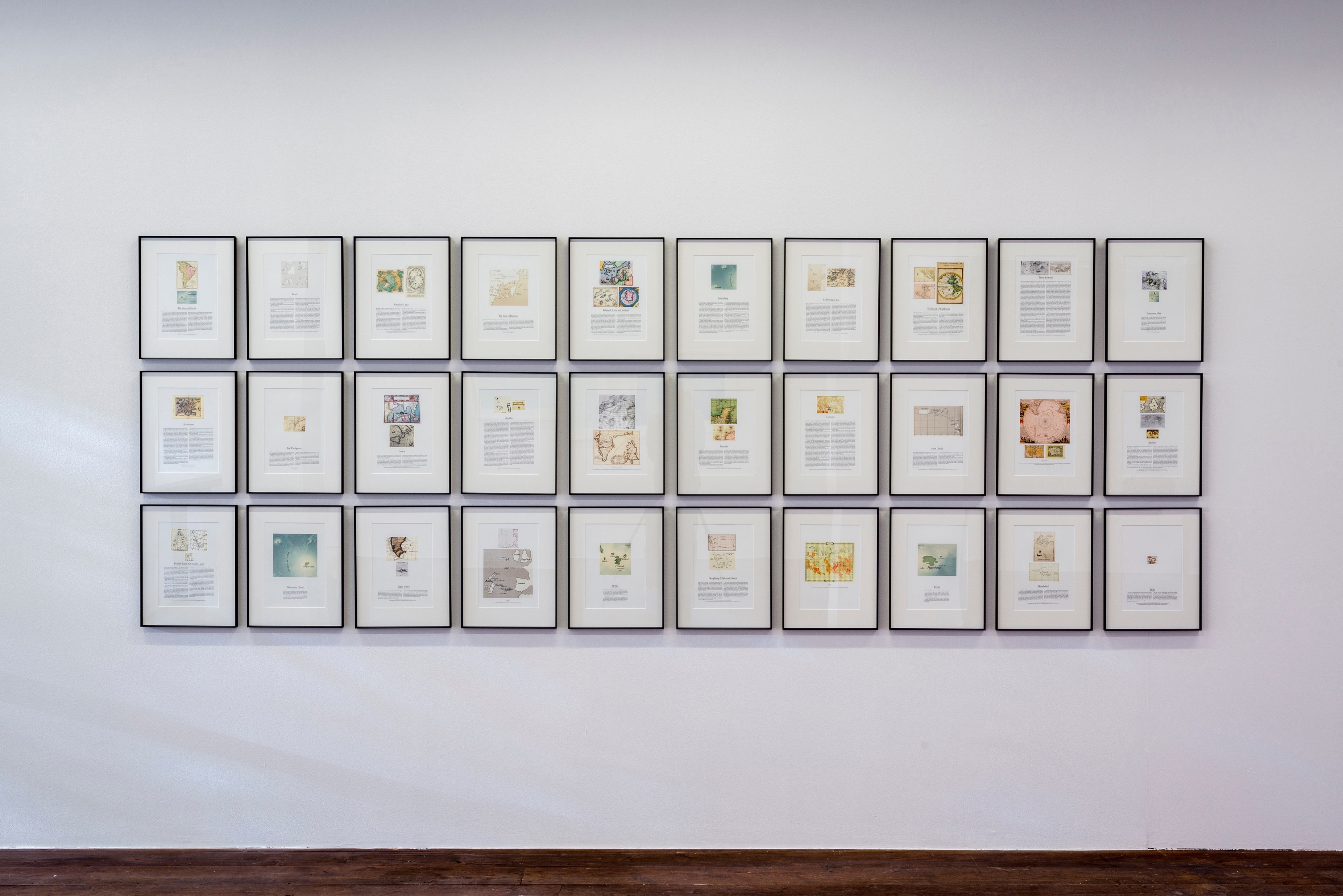
Agnieszka Kurant, Archive of Phantom Islands, 2011
archive of 30 small framed prints, 43.2 x 33.4 cm (each)
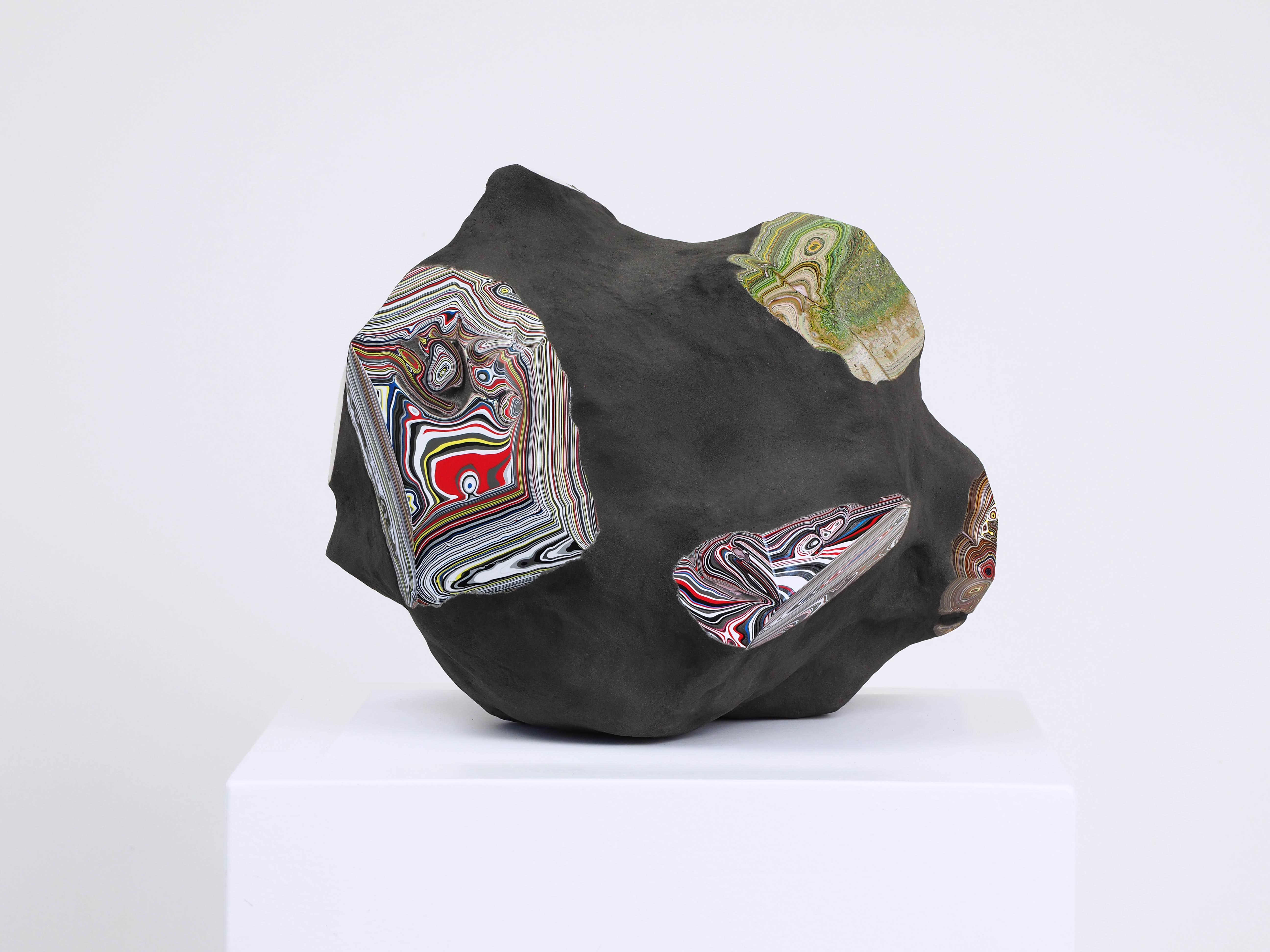
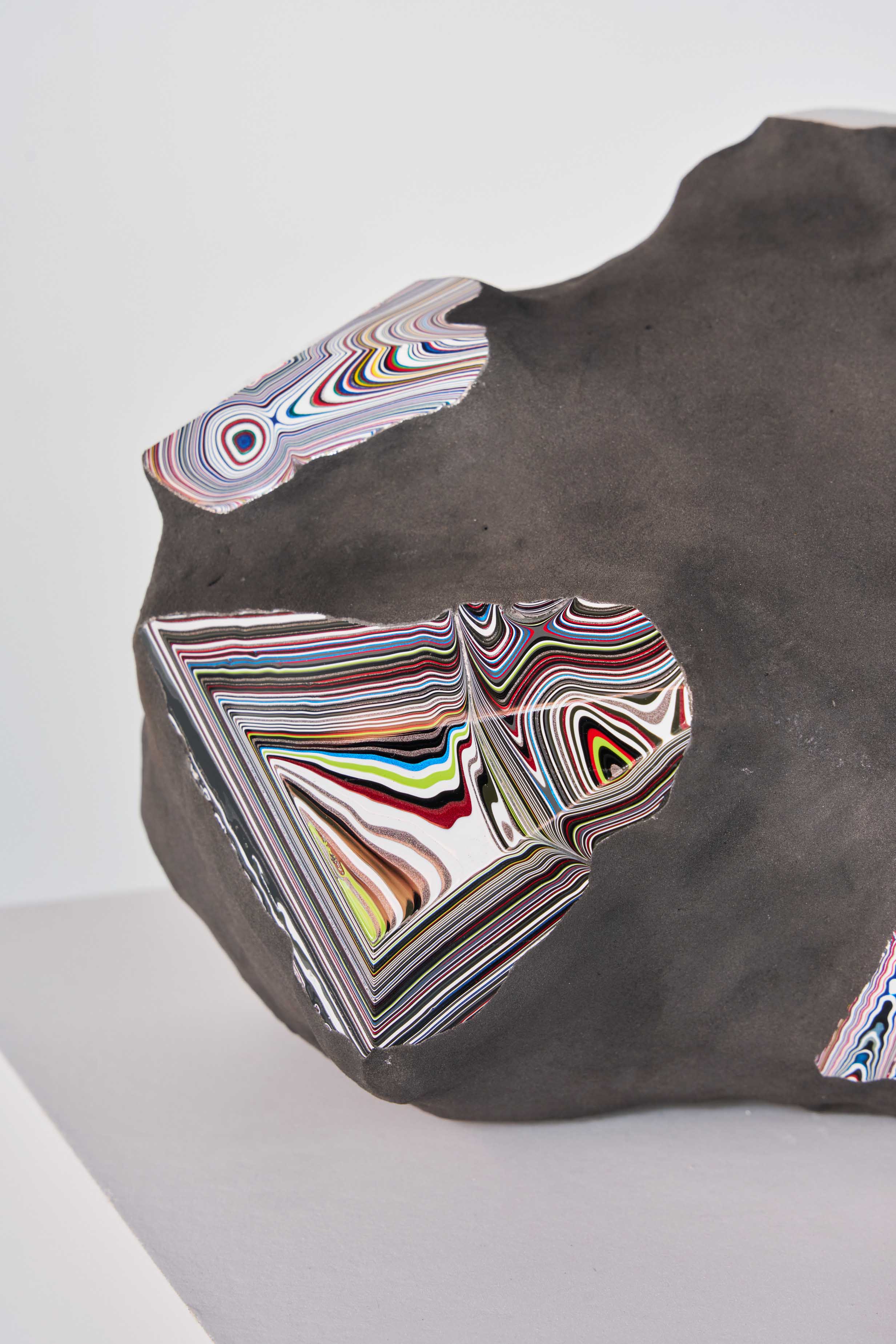
The Post-Fordite (2019 – ongoing) sculptures are made in part from Fordite, a quasi-geological formation consisting of thousands of layers of car paint that accumulated and fossilized over decades on automotive production lines. Sourced by former workers from factories shut down by automation and outsourcing, Fordite is cut, polished and sold as a gemstone, its value rising as the supply runs out. Industrial waste turned precious stone, each piece encapsulates a century of human labor and shifting consumer tastes.
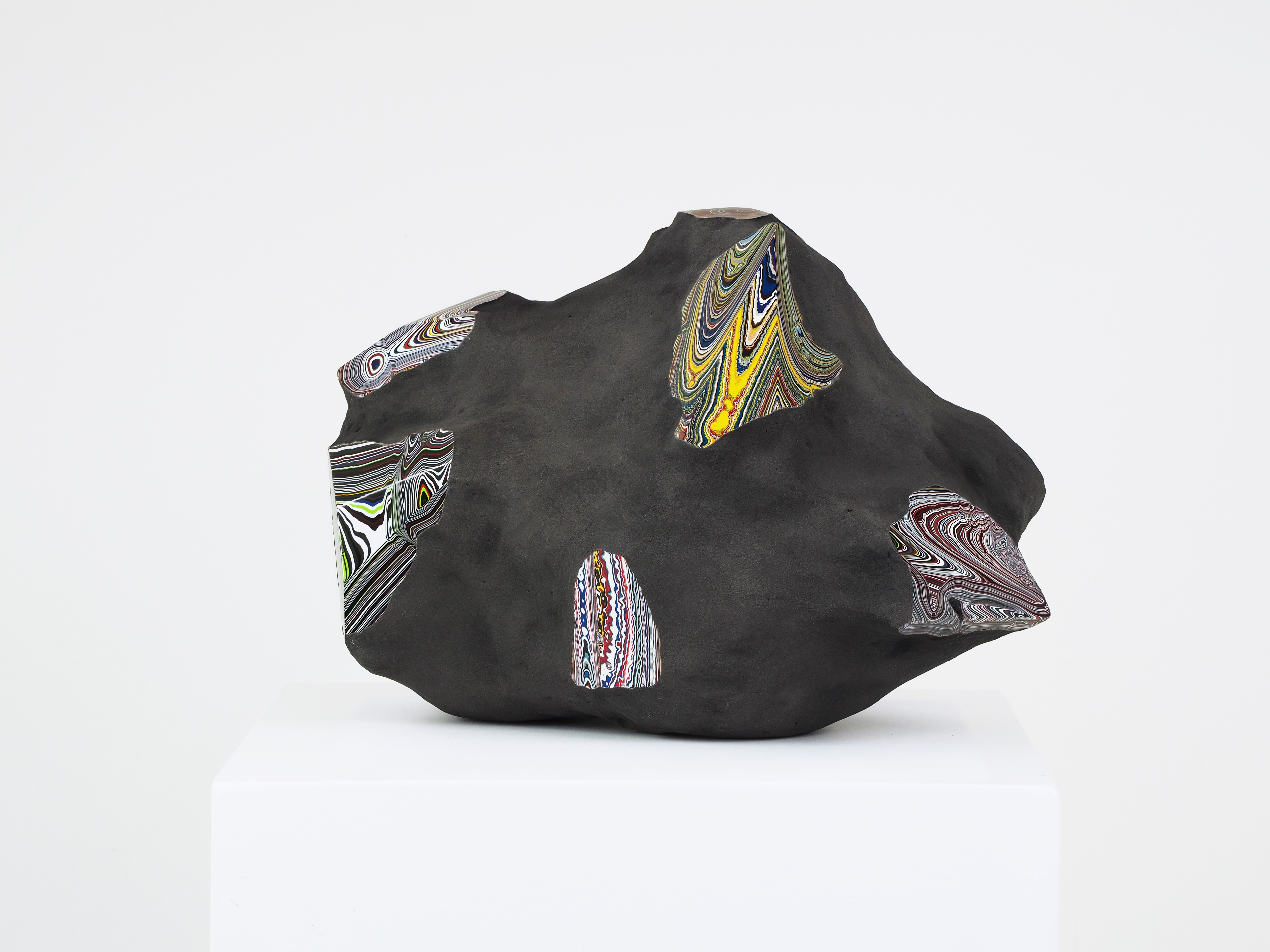
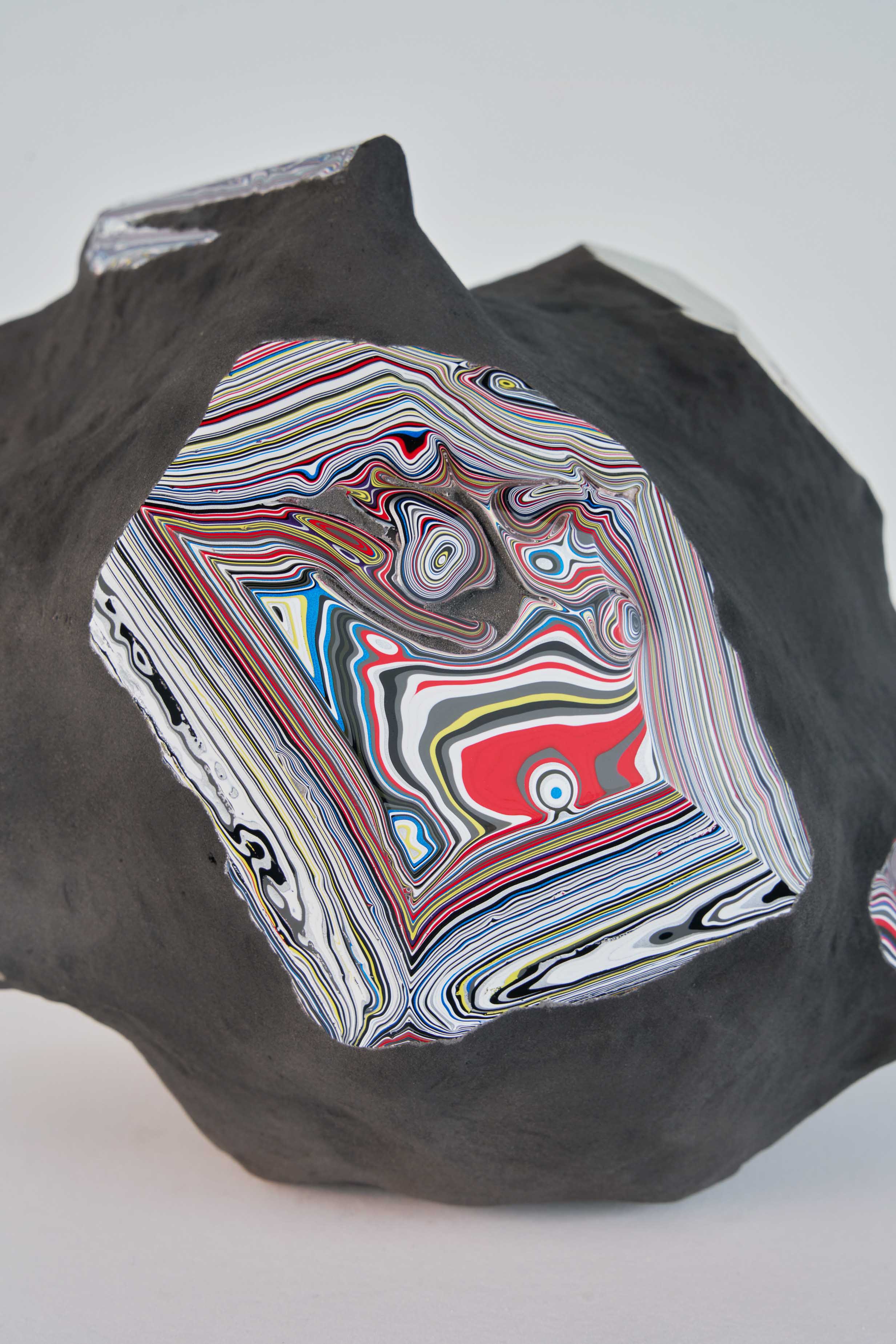
Agnieszka Kurant, Post-Fordite 20, 2026
fossilized automotive paint, epoxy resin, powdered stone, steel, presented on a pedestal, 21 x 25.4 x 19 cm
Agnieszka Kurant, Post-Fordite 19, 2026
fossilized automotive paint, epoxy resin, powdered stone, steel, presented on a pedestal, 30 x 27 x 20 cm
Agnieszka Kurant, Post-Fordite (detail), 2019 - ongoing
fossilized automotive paint, epoxy resin, powdered stone, steel, presented on a pedestal, 21 x 25.4 x 19 cm
Agnieszka Kurant, Post-Fordite (detail), 2019 - ongoing
fossilized automotive paint, epoxy resin, powdered stone, steel, presented on a pedestal, 21 x 25.4 x 19 cm
Suspended in midair, the sculptures in the series Unthoughtforms (2026) draw on the experiments of the cybernetician Gordon Pask, who developed chemical computers for the British military to solve problems beyond the reach of human thought. Kurant extends Pask’s experiments, using AI to scan the news and social media for current “unsolvable” problems and converting the data into electric currents and sound waves that control the growth of tree- and coral-shaped copper crystals, which are then plated in nickel and chrome.
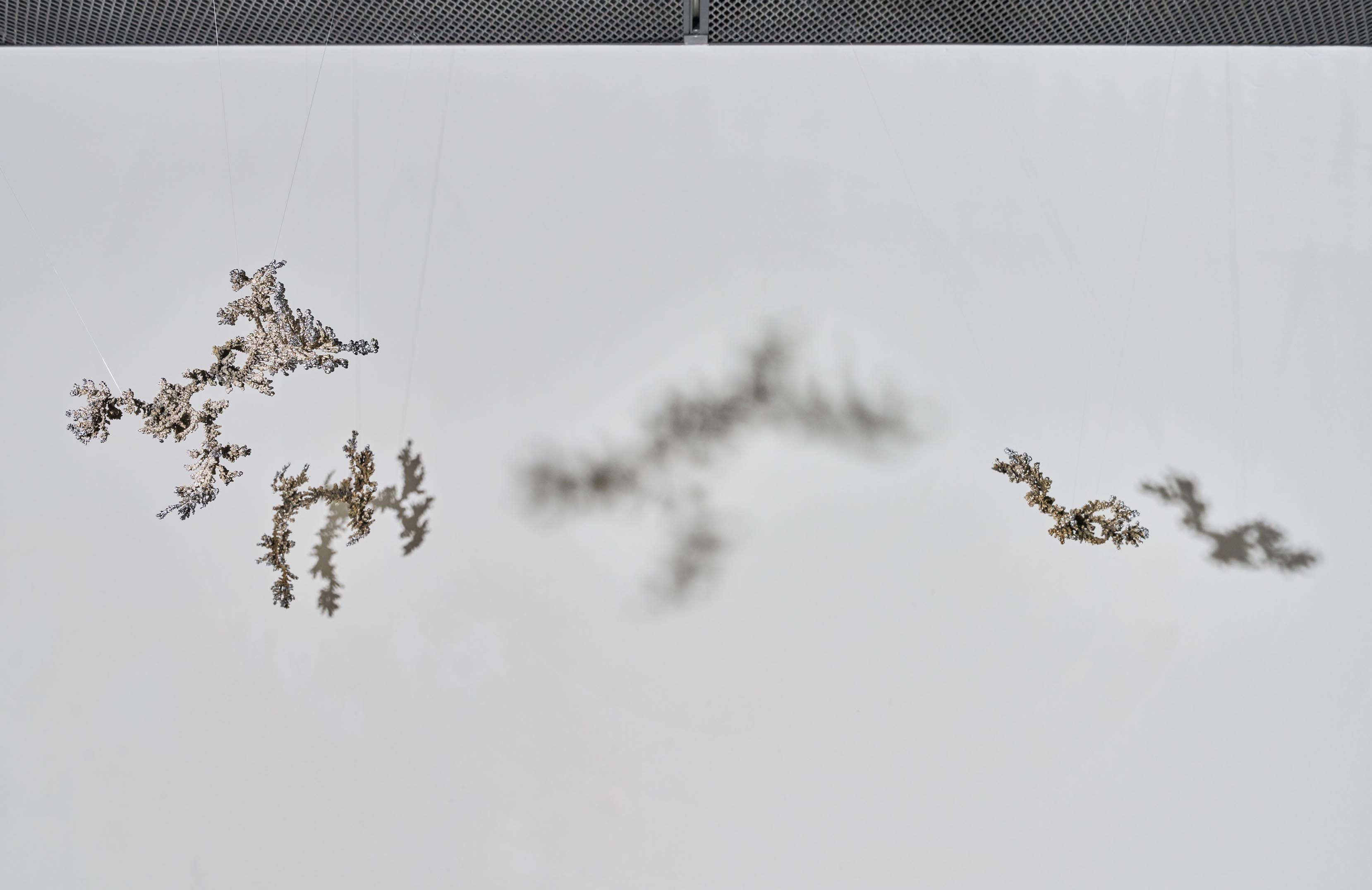
Agnieszka Kurant, Unthoughtforms, 2026
copper crystals grown by passing electric currents and sound waves through copper sulphate solution; nickel plated and chrome plated, 22.9 x 26.7 x 27.9 cm
Speculations (2016) presents a chessboard whose pieces are miniature shipping crates said to contain invisible artworks. The series was inspired by the use of crated artworks in freeports as mere pawns or currencies: stores of value exchanged in transactions between wealthy individuals and drug cartels. Here, art becomes a purely speculative asset. The work echoes the way in which Broodthaers opened his fictional museum, the Musée d’Art Moderne, Département des Aigles, Section XIXe siècle (1968), in his Brussels apartment with empty art-transport crates. In Kurant’s work, the game set out on the chess board of this unique work comes from the 2017 match between AlphaZero and Stockfish staged by Google DeepMind in London. Given only the rules, DeepMind’s AlphaZero algorithm taught itself chess by playing 44 million games against itself; after about four hours of training, it surpassed Stockfish, then the strongest chess engine. Chess, a war game, was the first realm in which artificial intelligence surpassed humans at strategic decision-making.
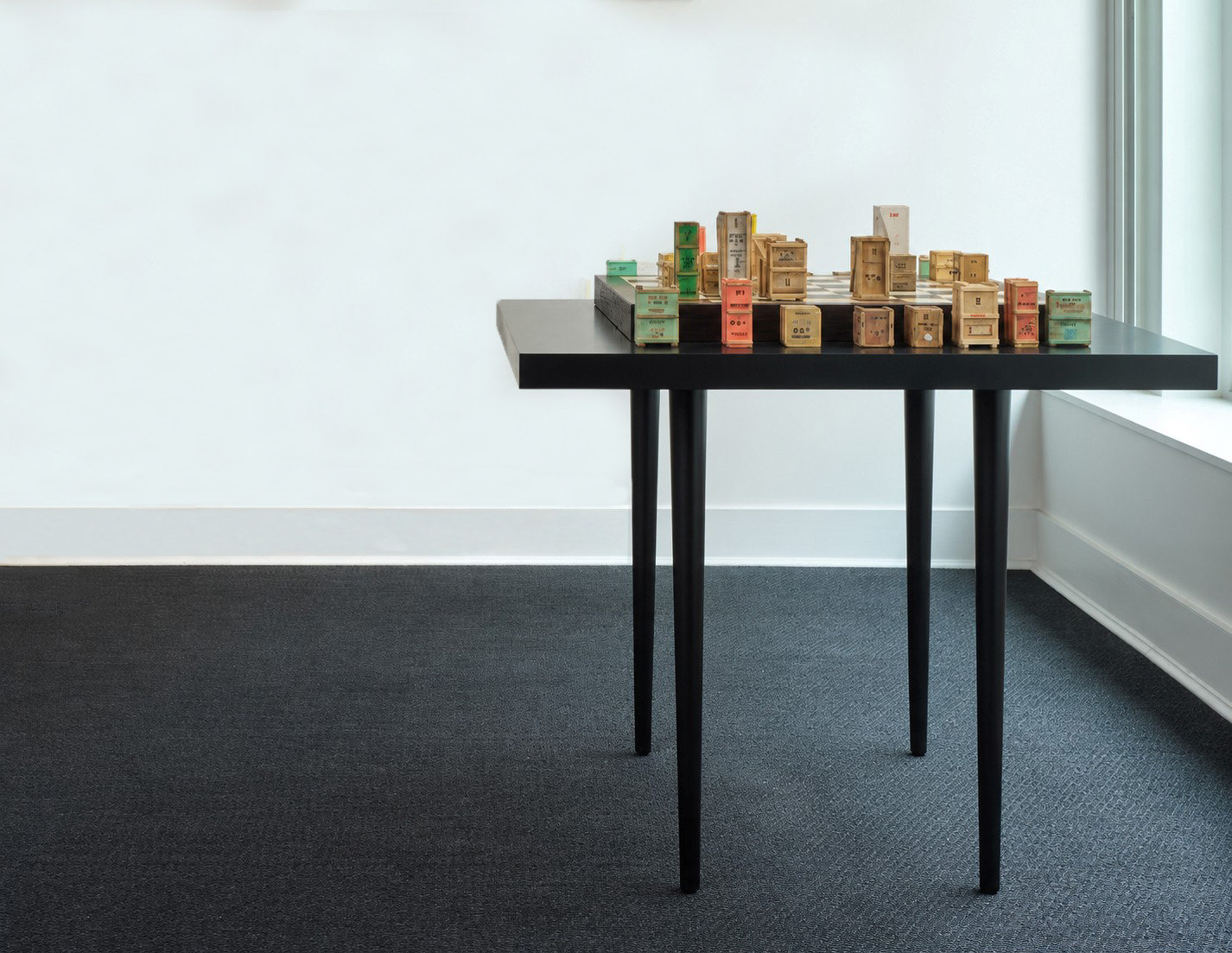
Agnieszka Kurant, Speculations, 2026
wood, plywood, paint, pigments, paper, metal, 90.2 x 81.3 x 81.3 cm
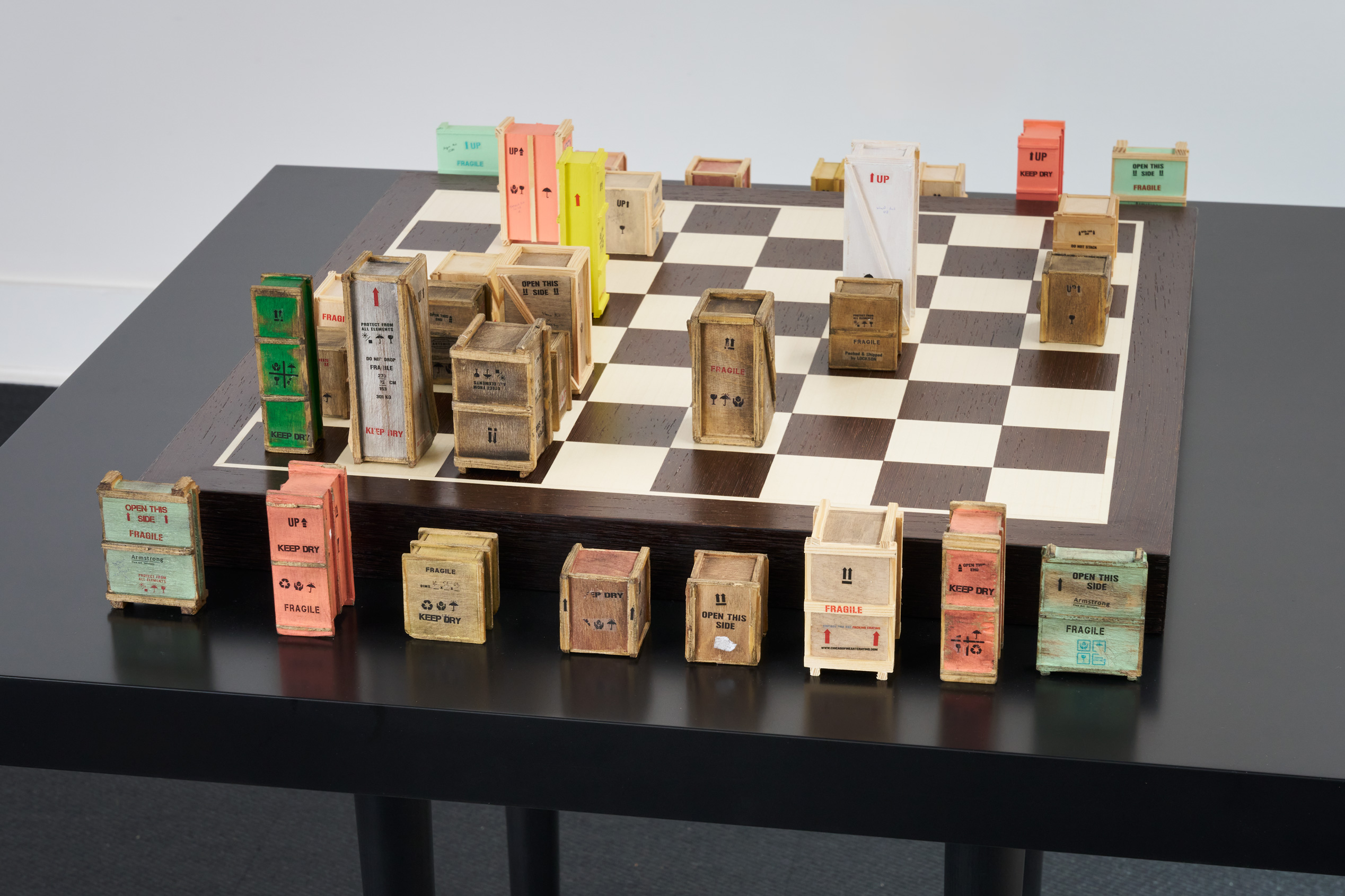
Agnieszka Kurant, Speculations, 2026
wood, plywood, paint, pigments, paper, metal, 90.2 x 81.3 x 81.3 cm
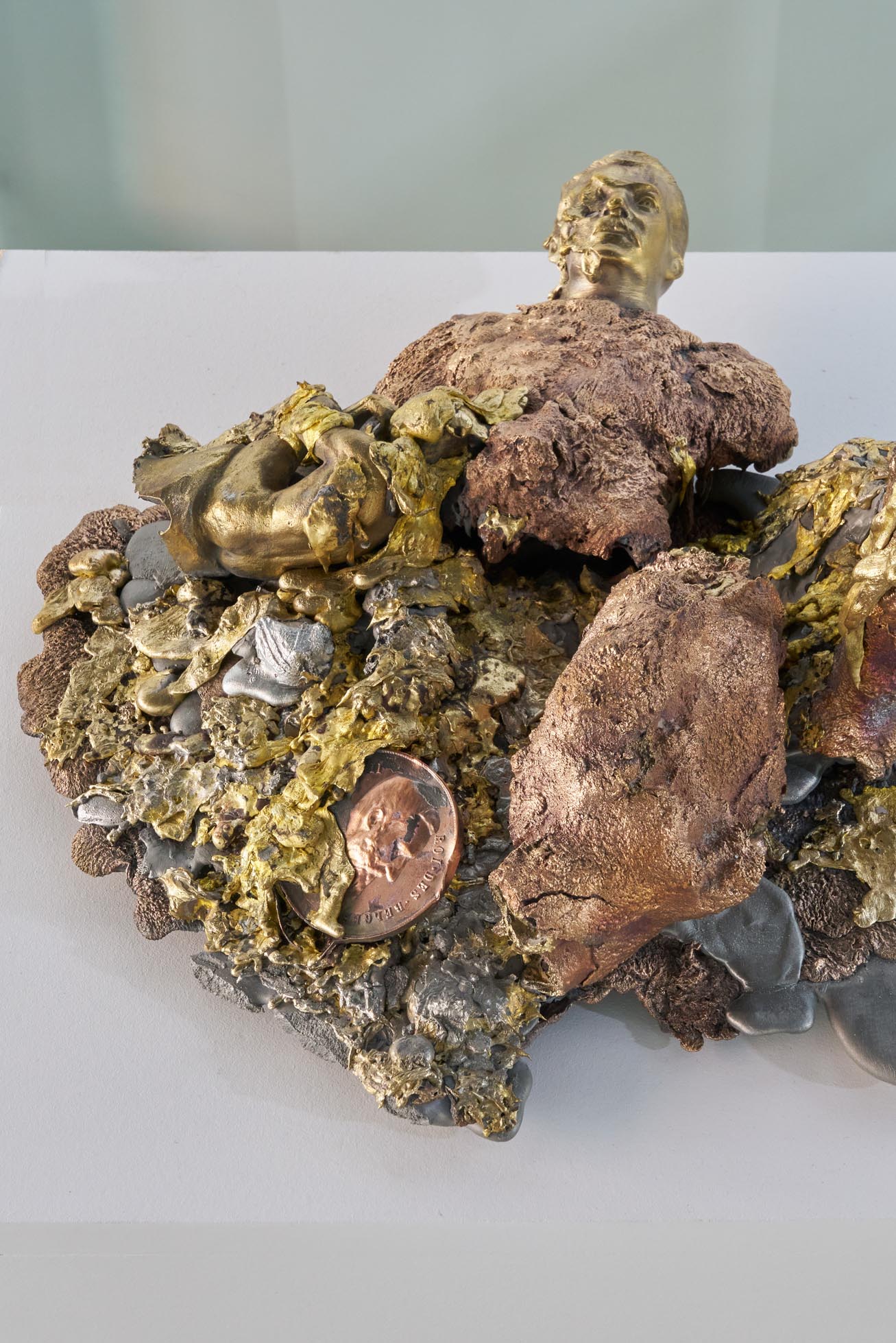
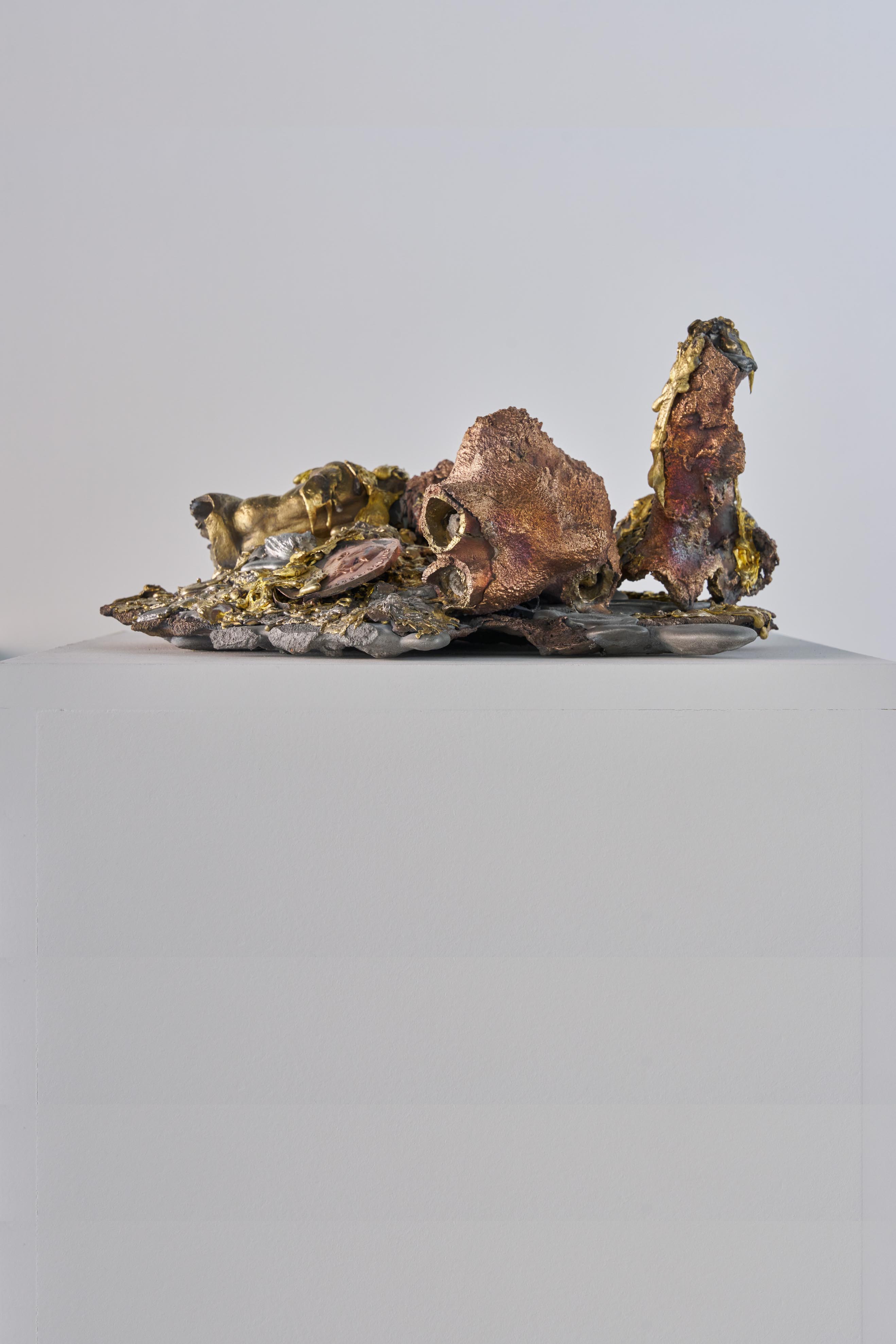
Liquid Modernity (2021) follows metal as it moves between conquest, war and culture. The bronze of the Vendôme Column in Paris came from cannons captured at Austerlitz. More than a century later, between 1941 and 1944, up to 1,750 bronze statues in occupied France were melted down for munitions. Drawing on this back-and-forth traffic, Kurant fused miniature replicas of contested and toppled monuments into a single mass: Leopold II of Belgium, whose exploitation of the Congo underwrote Belgian imperial wealth; Robert E. Lee; Joseph Stalin; and Michael Jackson. They are joined by a miniature of Rodin’s The Thinker, a cast of which was melted down by thieves for its scrap value.
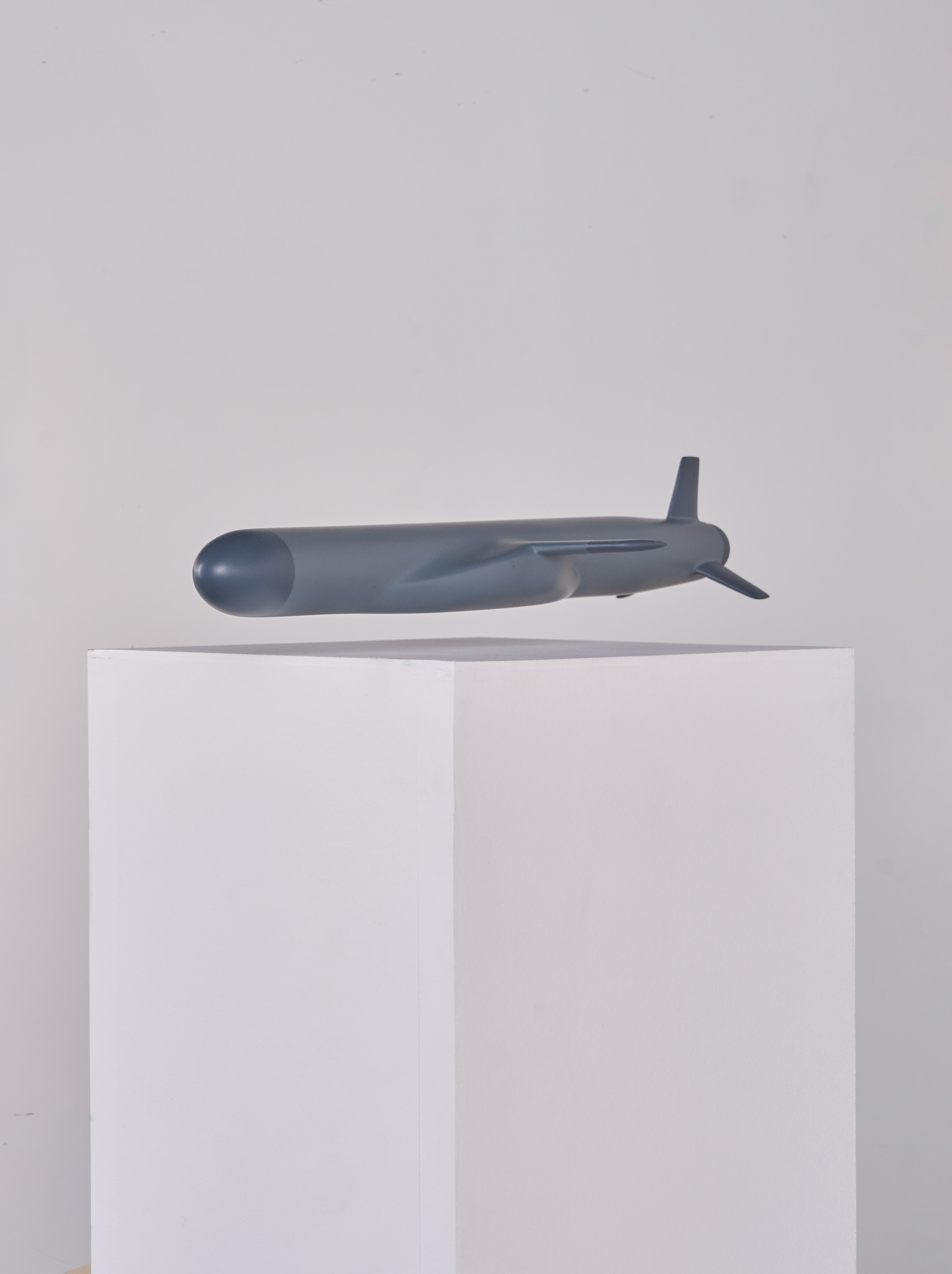
Unmanned (2026) is a levitating sculpture of an autonomous missile whose unknown trajectory and target are determined by artificial intelligence. The work reflects on how 21st-century warfare is being handed over to machines.
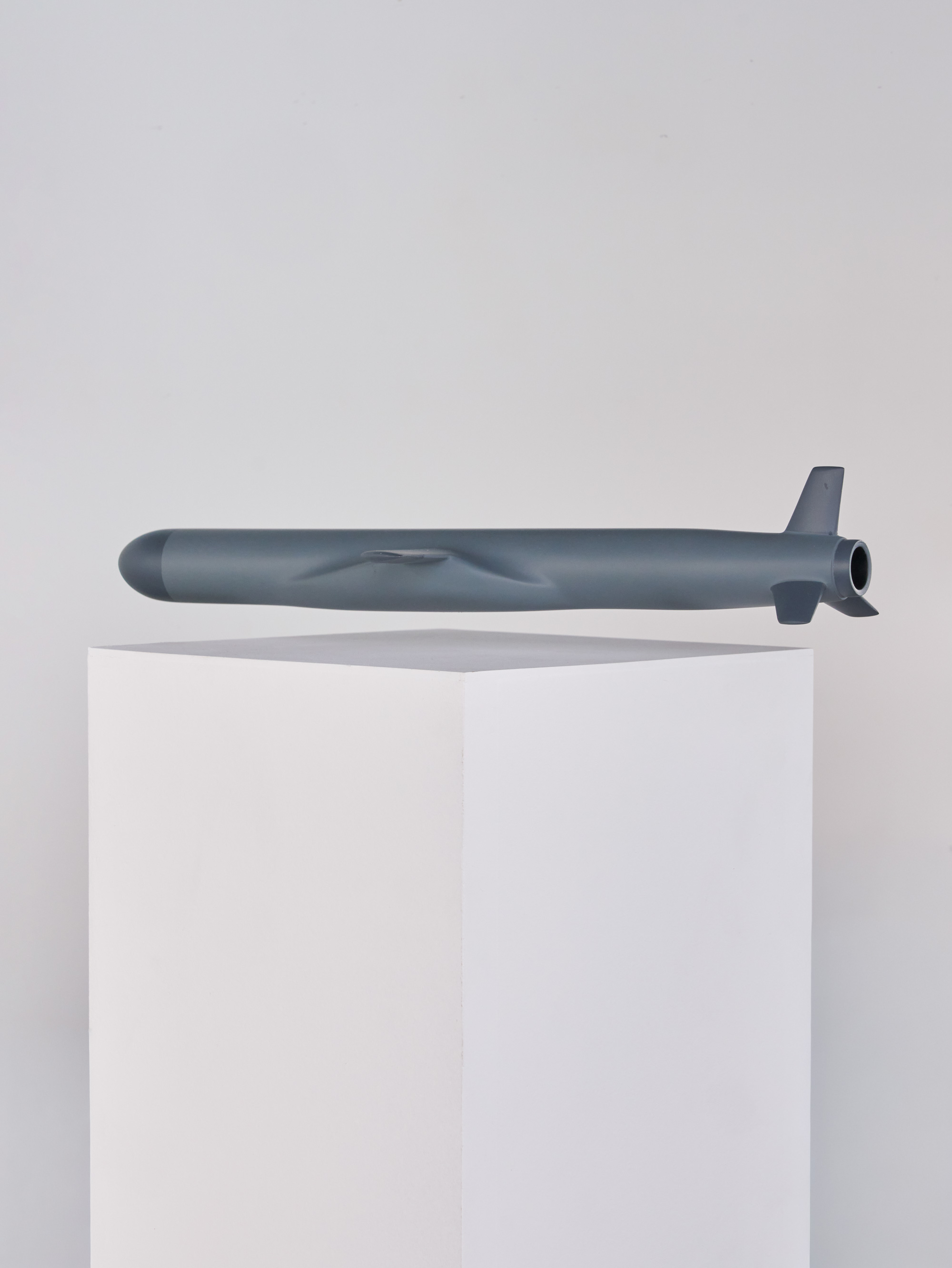
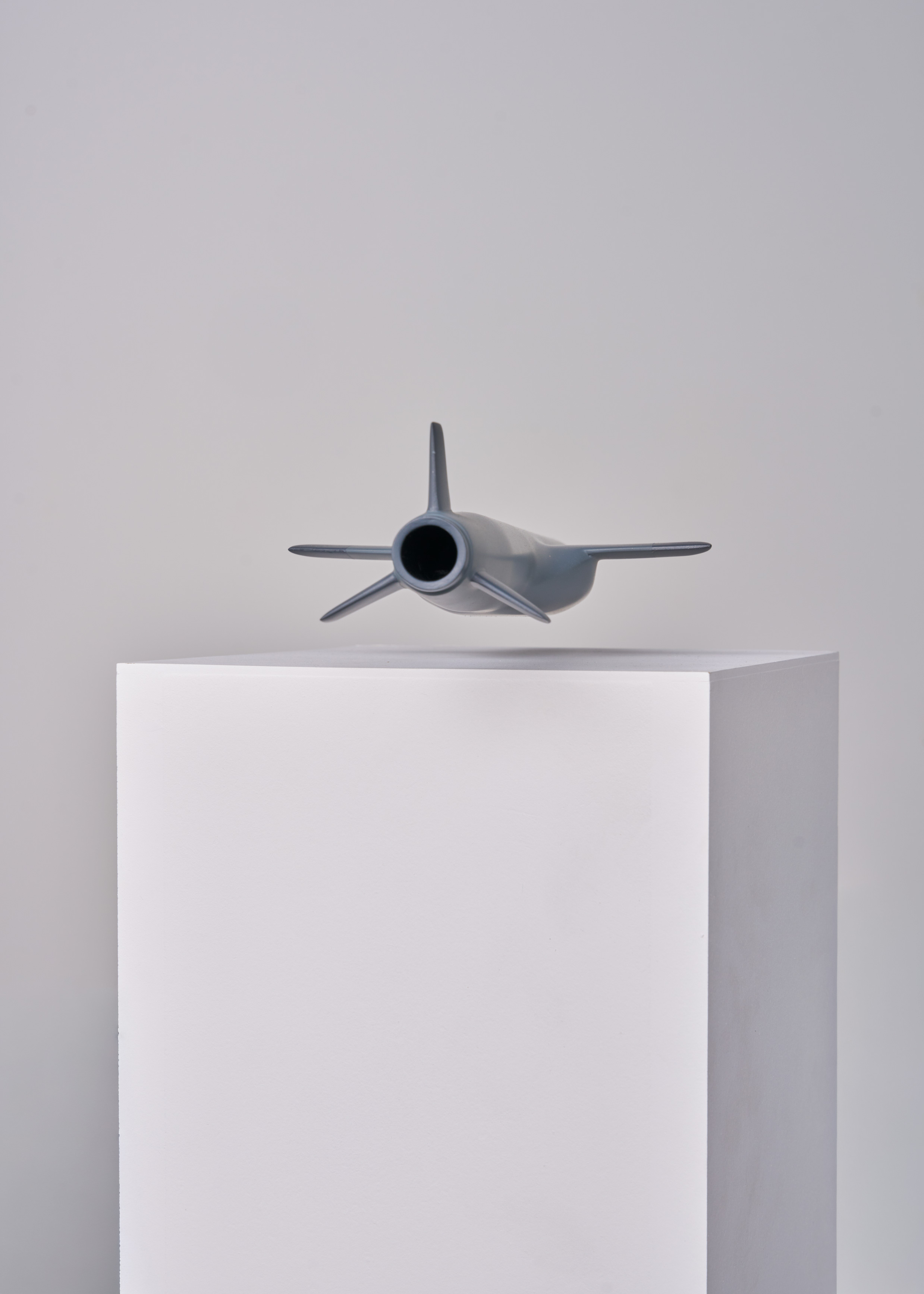
Agnieszka Kurant, Unmanned, 2026
foam, wood, powdered rock, metal, electromagnets, 23 x 23 x 23 cm
Agnieszka Kurant, Unmanned, 2026
foam, wood, powdered rock, metal, electromagnets, 23 x 23 x 23 cm
Agnieszka Kurant, Unmanned, 2026
foam, wood, powdered rock, metal, electromagnets, 23 x 23 x 23 cm